The stonemasonry training programme delivered by the Traditional Building Cultures Foundation in collaboration with the Royal Institute of Traditional Arts (WRTH), in the Asir region of Saudi Arabia, continues with new modules focusing on traditional building techniques and materials.
Following the first five weeks of training, during which students studied local architecture, architectural drawing and representation techniques, stoneworking, and the construction of walls and arches, the programme has progressed to its fifth module, dedicated to dry stone construction and its integration into the landscape, taught by Mallorcan master stonemason Lluc Mir.
Module 5: Dry Stone Construction and Integration into the Landscape
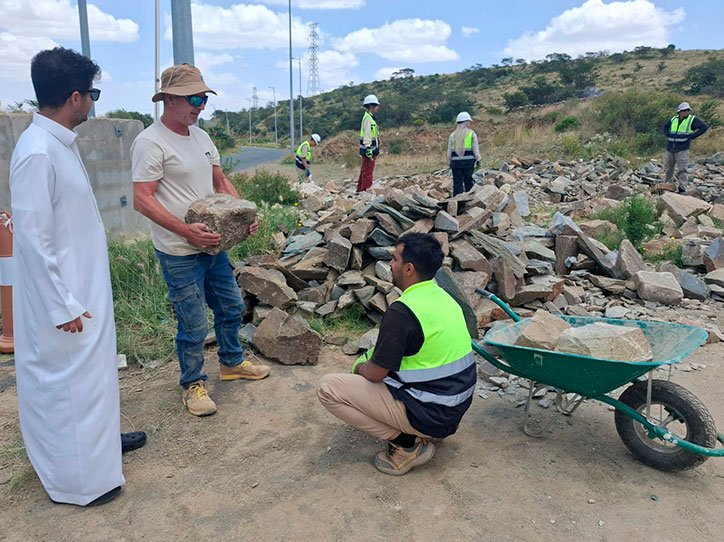
The fifth module began with an introduction to the tradition of dry stone construction in Mallorca and its various applications, including retaining walls, double-sided dry stone walls, and stone paving. This was complemented by a field visit to the area around Al-Soudah, where students examined traditional stone walls and analysed their characteristics and construction techniques.
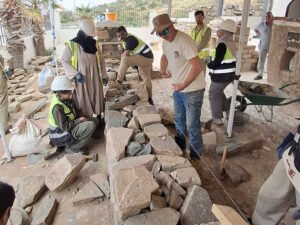
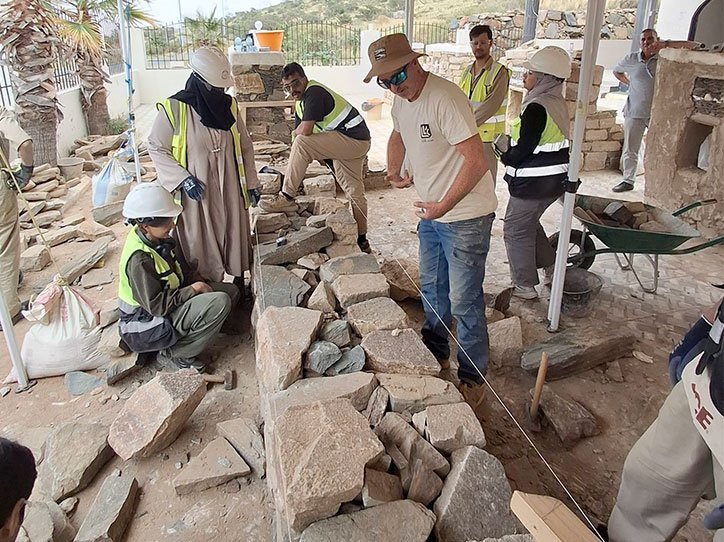
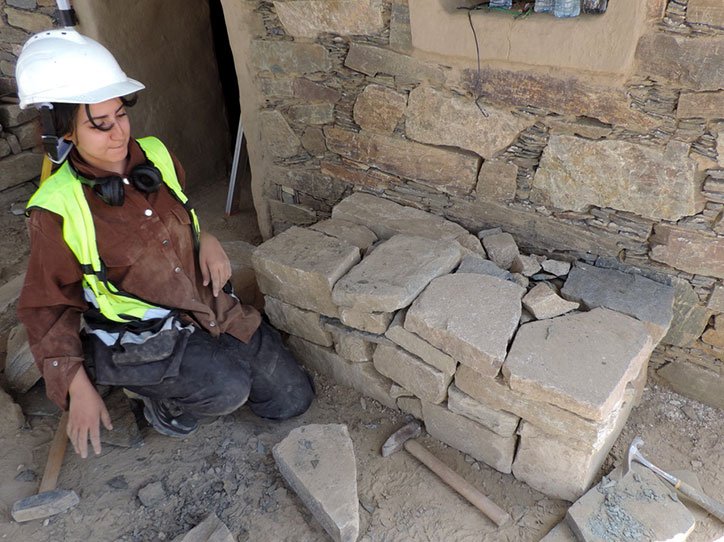
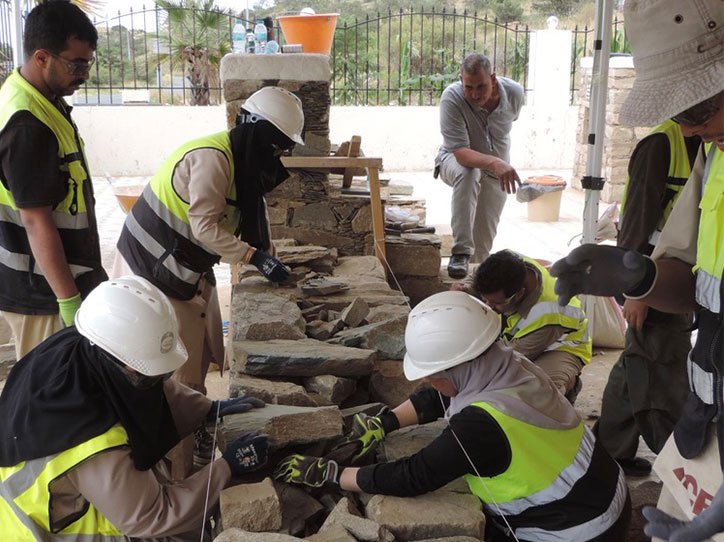
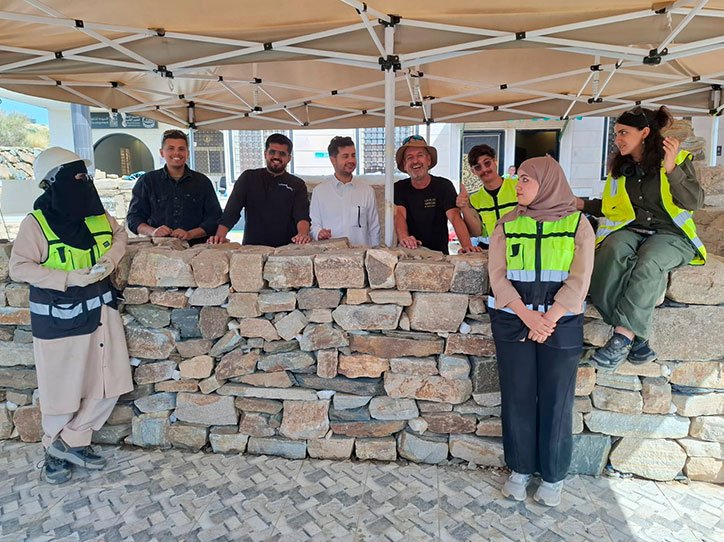
The practical work began with the construction of two small dry stone benches adjoining a structure previously built by the students. They then undertook the construction of a double-sided dry stone wall, from setting out and preparing the base to laying successive courses of stone and placing the coping stones.
Throughout these exercises, students learned how to select, position, and wedge stones, as well as how to control the alignment, batter, and stability of the walls. The practical work helped them understand how the correct arrangement of stones and the transmission of loads make it possible to build stable structures without the use of mortar.
The module concluded with a demonstration of opus spicatum, or herringbone masonry, which introduced students to alternative stone-laying patterns and their applications in traditional construction.
Module 6: Soils, Clays, and Traditional Mortars
Following the completion of the fifth module, the programme continues with a new module taught by Susana Osés, focusing on soils and traditional mortars and their applications in the construction and restoration of stone masonry.
During this sixth module, students will work with local soils, clays, sands, and aggregates to learn how to identify their properties, prepare different mixes, and understand how to adapt them to the characteristics of the stone found in Al-Soudah.
This new phase will allow students to deepen their understanding of the natural materials used in the region’s traditional construction and build on the stonemasonry and masonry techniques covered in previous weeks.
The programme will continue until January 2027, with further master craftspeople and professionals specialising in different aspects of traditional construction. The Foundation will continue to share updates on the programme’s progress and the results of the upcoming modules.