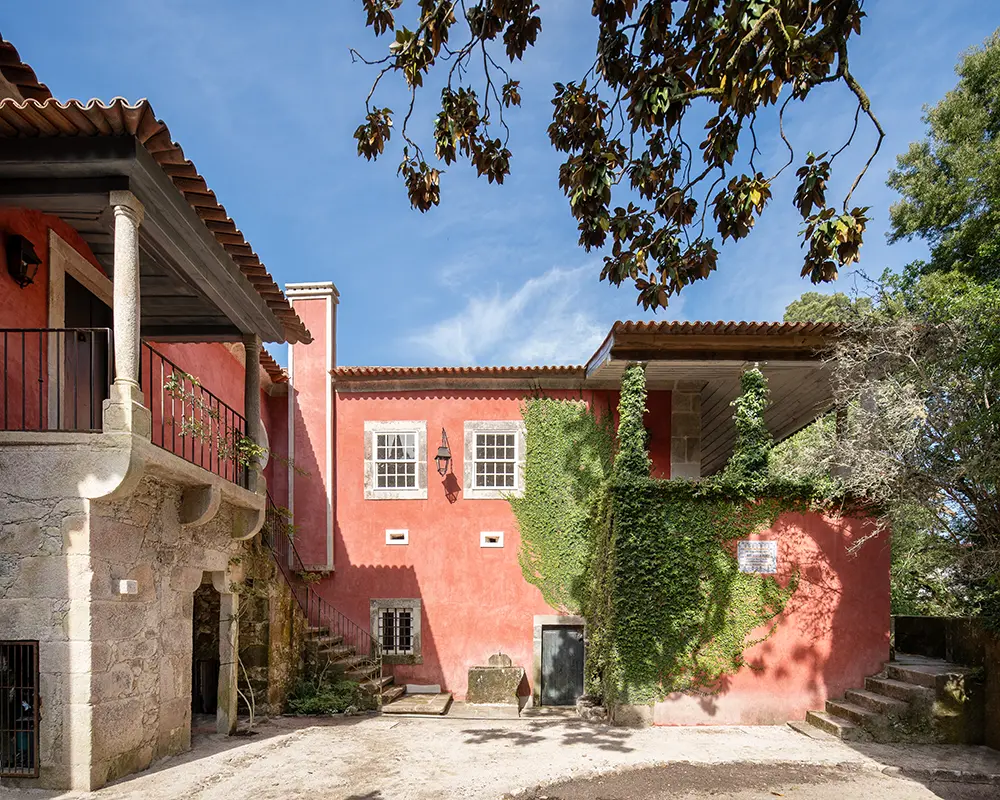
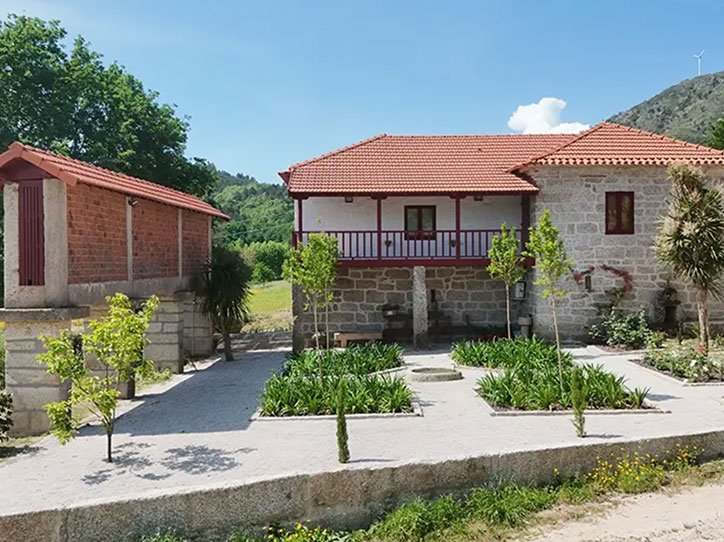
The 14th Rafael Manzano Prize for New Traditional Architecture has been awarded by the Traditional Building Cultures Foundation to Fernando Cerqueira Barros, a Portuguese architect whose career has been outstanding for its contribution to the preservation and continuity of traditional architecture in northern Portugal.
The Hortensia Herrero Foundation has been awarded the 2026 Richard H. Driehaus Medal for Heritage Preservation by the Traditional Building Cultures Foundation in recognition of its contribution to the protection, restoration, and recovery of historic and artistic heritage in the Valencia region.
– Fernando Cerqueira Barros, 2026 Rafael Manzano Prize –

His activity embraces heritage rehabilitation, new project designs based on local architectural identity, and important work in the fields of research and promotion of cultural and community initiatives aimed at maintaining and transmitting regional building knowledge. His work is characterized by a mastery of the local forms, materials, and techniques of building along with his close collaboration with masters of the various building trades and local communities, whose involvement is essential both to his projects and to his efforts to recover and disseminate their heritage.
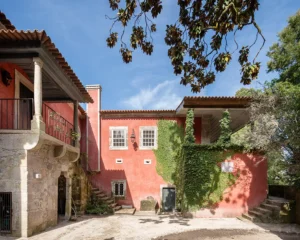
One of the most notable aspects of his career is his connection with Arcos de Valdevez in the region of Alto Minho, where he is from and where his relationship with architecture and landscape goes back to the hamlet of his childhood. In this region he has made significant efforts to recover architectural heritage and promote local culture. Beyond professional practice, his activity extends to the organization of meetings, workshops, and other initiatives to assemble the architects, researchers, artisans, and inhabitants of the region. This commitment to the study of diverse building cultures led him first to take part in the Iberian Summer School of the Traditional Building Cultures Foundation and, years later, to join the teaching staff of its more recent editions.
Fernando’s work sets out from a thorough knowledge of each place’s built environment and associated know-how. His way of working attaches particular importance to the direct study of local buildings through drawing and an analysis of their relationship with their setting. His projects seek to recover and give continuity to the principles that shaped local architecture, both in heritage rehabilitation and in new architectural designs suited to contemporary needs. His new work is thus integrated naturally into the existing fabric and helps preserve the landscape and its distinctive architectural character.
– Hortensia Herrero Foundation, 2026 Richard H. Driehaus Medal for Heritage Preservation –

Since its creation, it has promoted the rehabilitation of several of Valencia’s most notable historic buildings, some in a state of decay, and facilitated their recovery for the use and enjoyment of society. Its endeavor is moreover an example of cultural patronage that has mobilized considerable private resources for heritage preservation and given continuity to the work of many practitioners and master artisans specialized in the techniques of traditional building and restoration.
The Foundation was established in 2012 by the Valencian entrepreneur and patron of the arts Hortensia Herrero, for the purpose of contributing to her region’s cultural development through three main lines of action: preservation of heritage, promotion of contemporary art, and support for dance. From the outset, the restoration of monumental ensembles was at the heart of its activity, prompted by its founder’s personal interest in preserving historic buildings which, despite their importance to Valencia’s history and identity, are jeopardized by decay or a lack of resources for their upkeep. Hortensia herself has participated in the choice and development of projects, which the Foundation carries out in partnership with the institutions that own the buildings concerned, the various tiers of government, and specialist teams of architects, restorers, and craftspeople.
Among the first major restorations conducted by the Foundation was that of the Church of San Nicolás de Bari and San Pedro Mártir, refurbishing its extraordinary Baroque decoration and particularly the murals adorning its vaults, as well as broadly reinstating the ensemble’s artistic and architectural opulence. The Foundation also promoted the rehabilitation of Colegio del Arte Mayor de la Seda (the Silk Art Institute), former headquarters of the silk weavers’ guild, whose refurbishment resulted in a run-down building being turned into today’s Silk Museum, which preserves and disseminates the memory of one of the most significant industries in Valencian history.
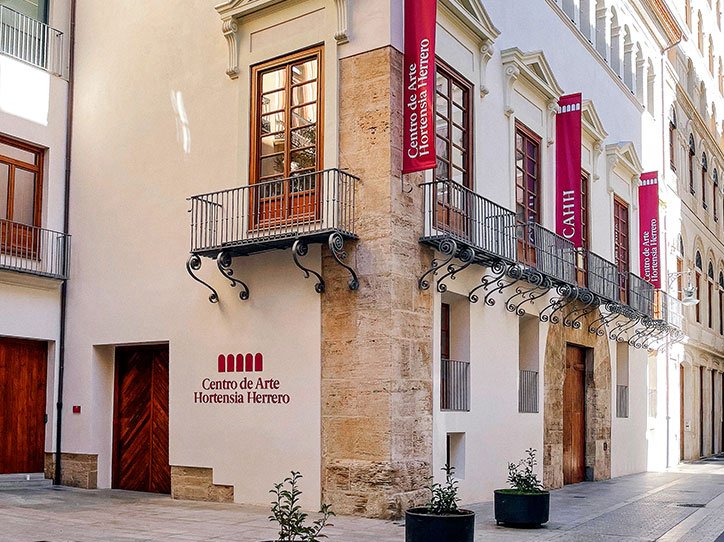
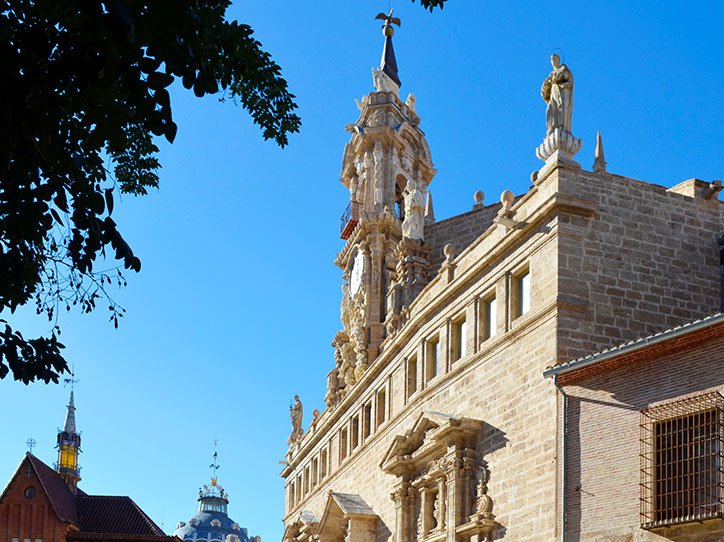
Another of the Foundation’s most notable projects has been the reconstruction of the Palace of Valeriola, which had been crumbling into decay and which now, following a thorough restoration, has become the Hortensia Herrero Art Center, inaugurated in 2023. The intervention made architectural preservation compatible with the needs of a contemporary cultural venue. More recently, the Foundation has promoted a comprehensive restoration of the church known as Santos Juanes, one of the outstanding historic buildings in Valencia’s old town. The work, completed in 2025, reinstated much of the church’s Baroque decoration, severely damaged by a fire in 1936 and by subsequent deterioration.