Portada » Initiatives » Training » Summer School » Current edition

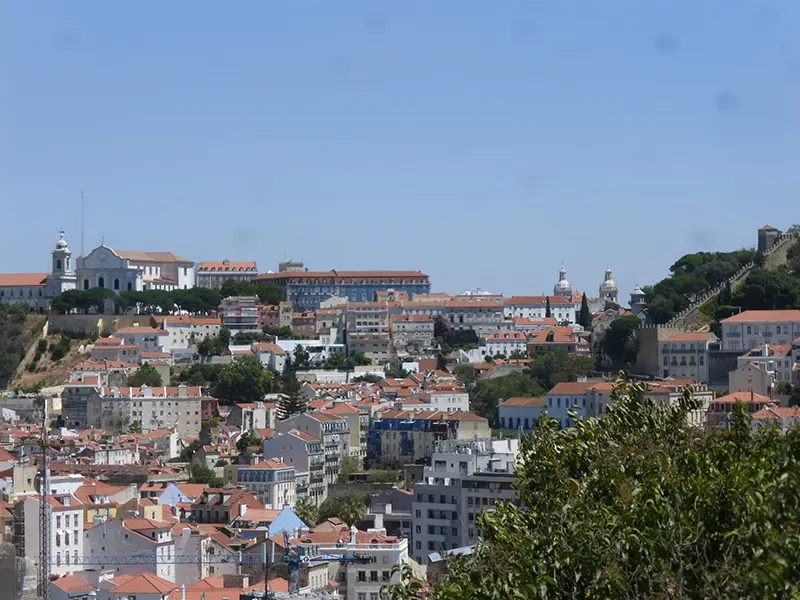
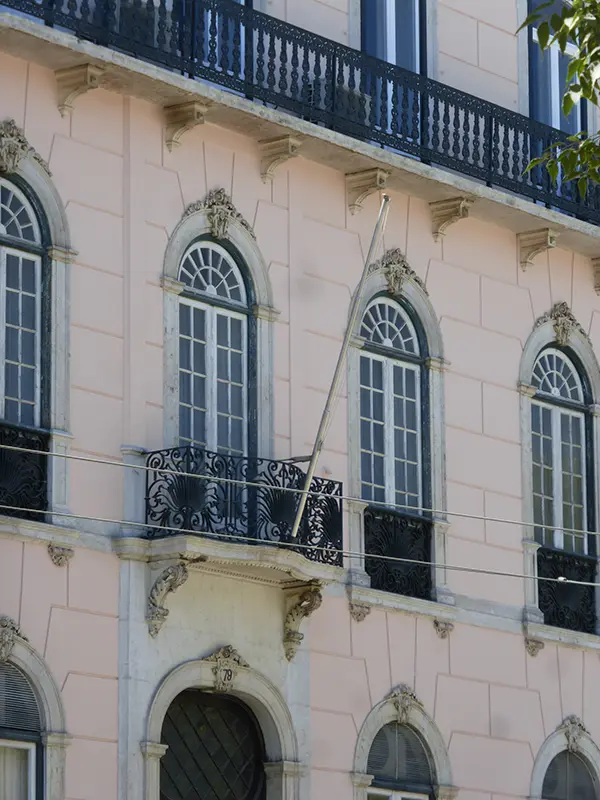
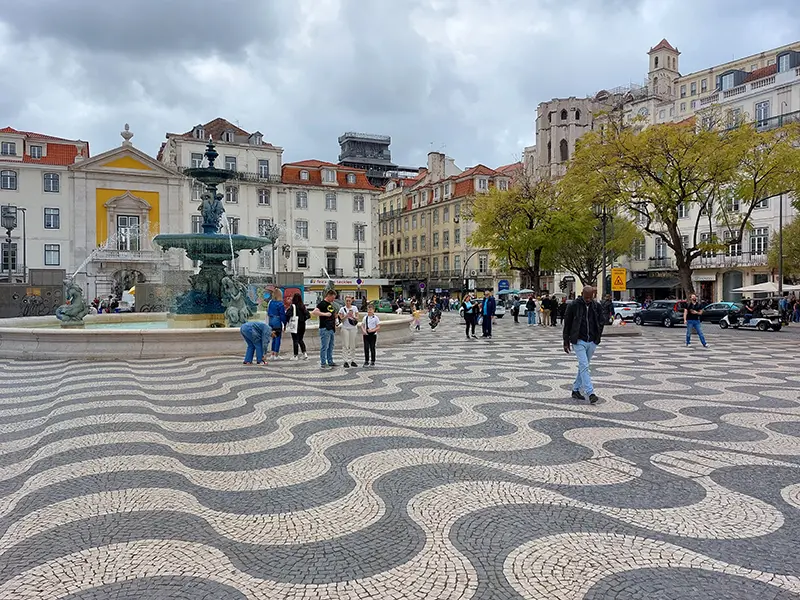
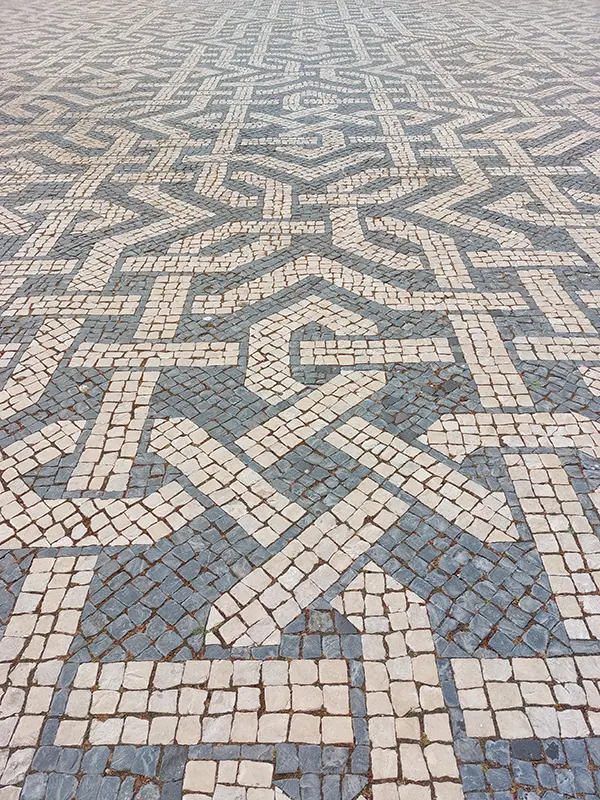
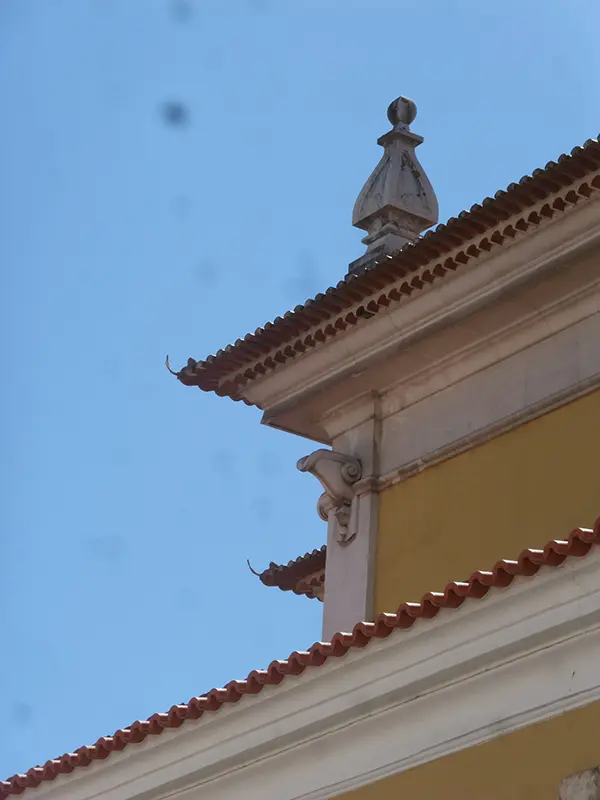
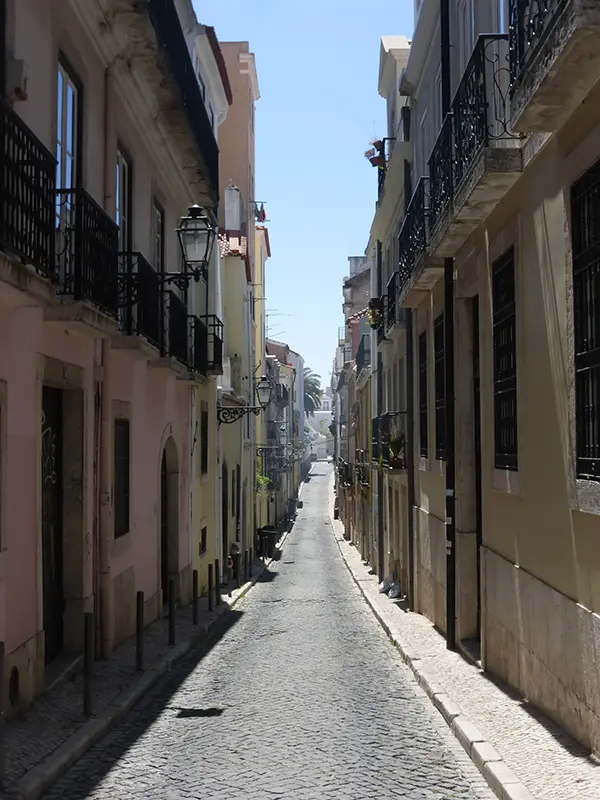
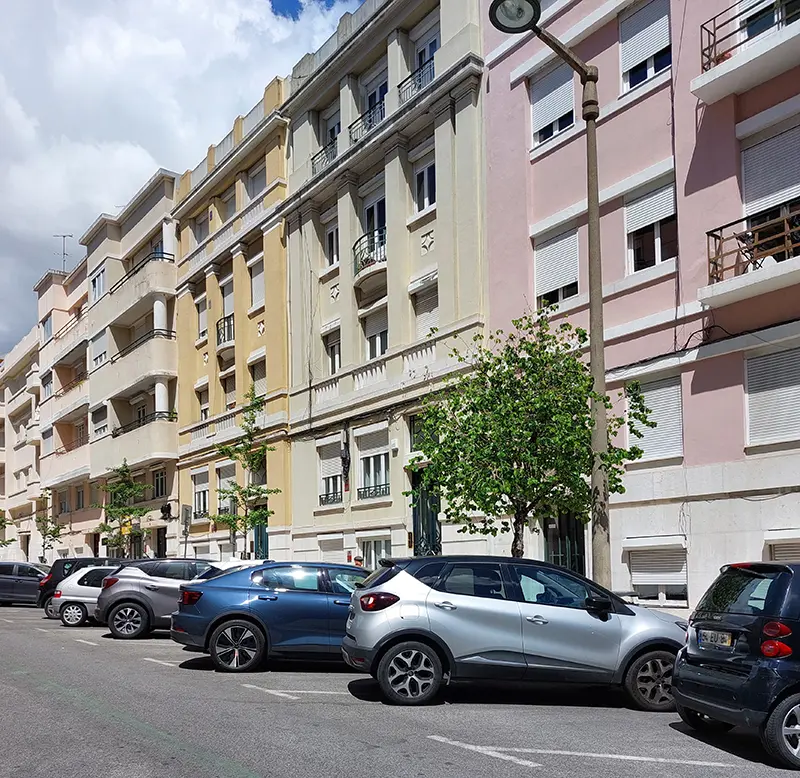
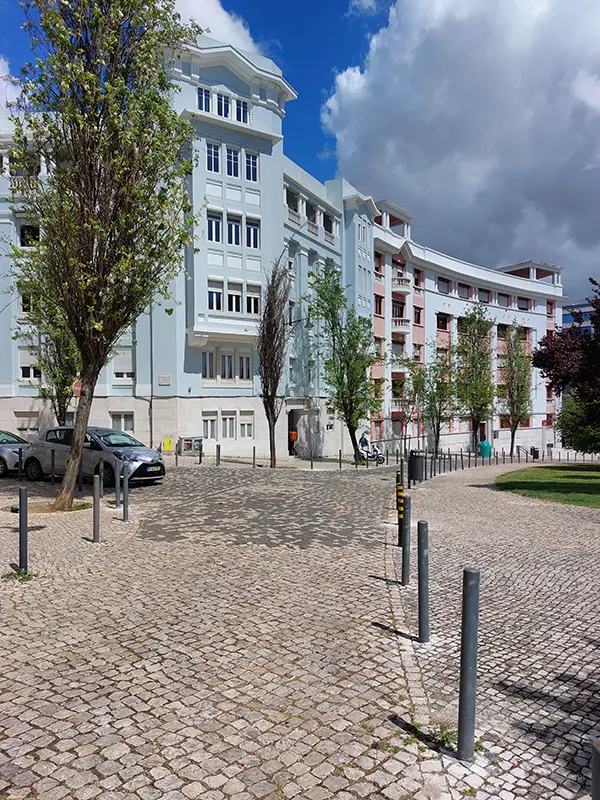
The language to be used during the activities will be mainly English, so at least basic skills using this language are recommended. . Hand drawing and measuring buildings will be the main activity to be developed each day, so a good command of it is also recommended.
Places are limited to 30. We will be developing a selection process among all candidates. Several places will be reserved for students from each participating university.
The tuition fee is 450 euros. This fee includes tuition, accommodation, meals, and scheduled local transportation during the two weeks of the Summer School. Once applicants have been accepted, the payment procedure will be provided.
*The actual cost per participant for this course is around 2,500 €, but thanks to the support of Richard H. Driehaus, the City Council of Lisbon, the Fundaçao Serra Henriques and the Universidade Nova de Lisboa, the participation fee has been reduced to the 450 € mentioned.
Those interested in participating must fill out the Application Form and send a selection of drawings and projects, preferably hand-made, to info@culturasconstructivas.org
The deadline for the submission of applications is April 8th 2026.
We recommend that all those traveling from abroad and requiring a visa complete the application form before March 20th so that, if selected, they will have enough time to complete all the necessary procedures to obtain it. Some spots will be assigned after this initial date by the selection committee, which will meet again after April 8th to review all applications and finalize the group.
If you have any question, please, do not hesitate to contact us info@culturasconstructivas.org

Martinez Alvarez Architects
She received a Bachelor of Architecture from the University of Miami and a Master in Design Studies from Harvard University. She is a member of the American Institute of Architects, served on the Board of Architects of Coral Gables, Historic Preservation Board of Coral Gables and volunteers as a member of several committees at the Sylvester Comprehensive Cancer Center in Miami, Florida.
Ana is a partner at Martinez Alvarez Architects. The office work has focused primarily on architectural and urban projects that contribute to the art of making cities. In the 20+ years of the firm’s existence, their work has ranged in scale and complexity from small houses to campus and institutional building design. The broader body of work and ongoing creative research includes residential projects in Coral Gables, Miami, and Palm Beach in Florida; single-family and multi-family housing in the new towns of Windsor and Alys Beach in Florida, and Tannin in Alabama; and historic preservation projects in Coral Gables and Miami in Florida, as well as Martha’s Vineyard and Boston in Massachusetts. The firm has been recognized by four Addison Mizner Awards – in the categories of Historic Preservation, Residential Design, and Renovations & Additions. The office’s work has also been featured in various publications, including the Journal of Traditional Building, Architecture and Urbanism.

Traditional Building Cultures Foundation | INTBAU Portugal
A graduate in Architecture of the Oporto School of Fine Arts and Lisbon Technical University (UTL), with a PhD from the Basque Country University (UPV). In 1991 he founded his own practice, from which he designed residential, hotel, retail and urbanism projects that continue the traditions of the regions in which he works. He has lectured at the Architecture Faculties of the Portuguese Catholic University in Viseu and Sintra and been a visiting lecturer at several European universities. He founded INTBAU Portugal, cofounded the European Council of Spatial Planners and is a member of the board of the Architectural Heritage Chapter of the Portuguese Institute of Architects. The quality of his work has earned him international awards such as the 2011 European Prize for the Reconstruction of the City given by the Philippe Rotthier Foundation, or the Rafael Manzano Prize in 2017.

University of the Basque Country
Graduated in Architecture from the School of Architecture of Donostia-San Sebastián where he graduated with honours. He also holds an MSc on Conservation at the University of the Basque Country and a PhD from the same university «Una bella sfida formale tra Quattrocento e Cinquecento» on the contributions made by the great architects of the First Italian Renaissance to the development of bastioned fortifications. Since 2012 he was teaching assistant of the Chair of Architectural Design of the School of Architecture of San Sebastián and has lectured on Urbanism. Currently he is lecturer on Architectural Design at the same university.
Since 2010 he has worked with the architects Manuel Iñiguez Alberto Ustarroz, with Iñigo Peñalba between 2012 and 2016, and since 2015 he works with Imanol Iparraguirre Barbero. Among his most notorious projects are the collaboration with Iñiguez Ustarroz on the Restoration of the City Walls of Hondarribia and the project for the Imperial Fora of Rome. Together with Imanol Iparraguirre, he won the 1st Prize of the Richard H. Driehaus Architecture Competition in 2017 for the restoration of the Renaissance Palace of Grajal de Campos (León) and again in 2018 with his project for the Medieval Walls and surroundings of the Convent of La Coria in Trujillo (Cáceres). In 2019 they received the Award for Emerging Excellence in the Classical Tradition given by the Institute of Classical Architecture Art (ICAA), the Prince’s Foundation (PF), and the International Network for Traditional Building, Architecture Urbanism (INTBAU).

Universidad Politécnica de Madrid | Traditional Building Cultures Foundation | INTBAU Spain
PhD in Architecture and MA in Conservation and Restoration of Architectural Heritage from the Madrid Polytechnic University School of Architecture, where he has been Associate Professor since 2019.
He has been Associate Professor at the Alfonso X el Sabio University (2009-19), Visiting Scholar at the University of Notre Dame School of Architecture (US, 2016) and guest lecturer at universities such as Yale, Miami, Colorado, Liverpool or Politecnico di Milano, among others. His professional practice has been devoted to traditional architecture and building and the restoration and study of historic buildings, largely in Spain and Morocco, along with the creation and management since 2012, thanks to Richard H. Driehaus, of the initiatives run today by this Foundation. He is also the CEO of Kalam Corporation in the USA, a board member of the NGO Terrachidia and cofounding Vice-Chair of INTBAU Spain. Recognitions of this work include the 2015 INTBAU Excellence Award, the 2019 Hispania Nostra Award, a Special Mention in the 2019 EU-Europa Nostra Awards, the 2021 Philippe Rotthier European Architecture Prize, and the 2021 National Craft Award.
Traditional Building Cultures Foundation | INTBAU Spain
A graduate in Architecture of the Madrid Polytechnic University, with a degree in Psychology from the UNED University. For over five years he has been General Coordinator of the French cultural centre Domaine de Boisbuchet, where he has organised courses, exhibitions and residential workshops linked to art, design and architecture. He is also responsible for the collection, library and archive of Alexander von Vegesack, founder of the Vitra Design Museum and a renowned collector. Since 2019 he has been part of the team which has created and coordinated the initiatives run by this Foundation. Recognitions of this work include the 2019 Hispania Nostra Award, a Special Mention in the 2019 EU-Europa Nostra Awards, and the 2021 National Craft Award.
Traditional Building Cultures Foundation | INTBAU Spain
A graduate in Architecture, specialising in Precarious Human Settlements, of the Madrid Polytechnic University. She has taken part in various restoration projects in Casamance (Senegal) and collaborated in the coordination of various workshops for the restoration of historic buildings and earthen constructions with the NGO Terrachidia in Morocco. She has been Secretary and Treasurer of INTBAU España since 2016 and, thanks to Richard H. Driehaus, is part of the team which since 2016 has created and coordinated the initiatives run by this Foundation. Recognitions of this work include the 2019 Hispania Nostra Award, a Special Mention in the 2019 EU-Europa Nostra Awards, and the 2021 National Craft Award.

University of the Basque Country
Graduated in Architecture from the School of Architecture of Donostia-San Sebastián and holds a MSc in Conservation and Restoration of Architectural Heritage from the same university. He is Predoctoral Fellow at the University of the Basque Country and Visiting Fellow at the Deutsches Archäologisches Institut in Madrid where he is developing his PhD on the evolution of circular architecture since Classical Antiquity to Renaissance; paying special attention to the notions of model and type, urban layout, the meaning of architectural form; architectural mimesis and appropriation. He is similarly interested in Neoclassicism, Nordic Classicism and Italian Tendenza.
As an architect, Imanol has collaborated with Alberto Campo Baeza, and also with Manuel Iñiguez Alberto Ustarroz, taking part in the restoration of the City Walls of Fuenterrabia (Spain) and making a proposal for the Imperial Fora of Rome – finalist of the Piranesi Prix de Rome 2016. Together with Aritz Díez Oronoz, he won the 1st Prize of the Richard H. Driehaus Architecture Competition in 2017 for the restoration of the Renaissance Palace of Grajal de Campos (León) and again in 2018 with his project for the Medieval Walls and surroundings of the Convent of La Coria in Trujillo (Cáceres). In 2019 they received the Award for Emerging Excellence in the Classical Tradition given by the Institute of Classical Architecture Art (ICAA), the Prince’s Foundation (PF), and the International Network for Traditional Building, Architecture Urbanism (INTBAU).

University of Miami
He is an Associate Professor at the University of Miami, School of Architecture. He received a Bachelor’s Degree in Architecture from the University of Miami, School of Architecture in 1987 and the degree of Master in Architecture in 1991 from Princeton University. His teaching focuses on courses in Design, History/Theory and Drawing in the core of both undergraduate and graduate programs; including teaching in the Rome Program, where he lectures and leads courses on Roman Villas and Gardens, Renaissance and Baroque Architecture and Urban Design. He also teaches seminars on selected topics on Early American Architecture and heads the UM Grand Tour of Europe (a university wide summer study abroad program), along with participating in the INTBAU International Summer Programs on traditional architecture and urban design research. Professor Martinez is the recent recipient of the ICAA Addison Mizner Award in Pedagogy in 2024.
Frank is a partner at Martinez Alvarez Architects. The office work has focused primarily on architectural and urban projects that contribute to the art of making cities. In the 20+ years of the firm’s existence, their work has ranged in scale and complexity from small houses to campus and institutional building design. The broader body of work and ongoing creative research includes residential projects in Coral Gables, Miami, and Palm Beach in Florida; single-family and multi-family housing in the new towns of Windsor and Alys Beach in Florida, and Tannin in Alabama; and historic preservation projects in Coral Gables and Miami in Florida, as well as Martha’s Vineyard and Boston in Massachusetts. The firm has been recognized by four Addison Mizner Awards – in the categories of Historic Preservation, Residential Design, and Renovations & Additions. The office’s work has also been featured in various publications, including the Journal of Traditional Building, Architecture and Urbanism.
University of Notre Dame
Lucien studied architecture in Paris, where he graduated in 1980. He is a director of Katarxis Urban Workshops in Luxembourg and a partner at Heure Bleue Architects in London. He is currently an associate professor at the University of Notre Dame. He has worked in Luxembourg, where he has carried out a wide range of traditional designs in collaboration with Colum Mulhern. He has taught and lectured in Europe, America and Asia, and has collaborated with the Prince of Wales Urban Design Working Group in Potsdam and Berlin, the University of Miami, the Polytechnic University of Puerto Rico, the University of Bologna, the Portuguese Catholic University of Viseu, and the University of Notre Dame (Rome Study Program and U.S. Campus, South Bend, Indiana, University of Buckingham and University of Luxembourg). He is the author, editor or co-editor of numerous publications, among them: New Palladians, Traditional Architecture: Timeless Building for the Twenty-First Century, The architectural Capriccio,In the Mood for Architecture and Travel Sketches from Elsewhere Nowhere.

Centro de Estudos de Arquitectura e Urbanismo | Faculdade de Arquitectura da Universidade do Porto
Architect from the University of Porto, he is a researcher at the Centre for Studies in Architecture and Urbanism (FAUP) and a member of the UNESCO Chair “Heritage, Cities and Landscapes.” His work focuses on traditional architecture in northern Portugal, especially in the Alto-Minho region. He is the author of the documentary Das Arquiteturas Tradicionais and co-founder of the Red Horrea network. He received an Honourable Mention in the 2024 Philippe Rotthier European Architecture Prize for his intervention in the Monastery of São João de Cabanas. He combines professional practice with research in heritage and cultural landscape, and has been a speaker at various conferences and events.
He was part of the organizing committee of the International Colloquium on Vernacular Architecture in Arcos de Valdevez (2013) and the 2nd International Meeting of Red Horrea (2023). He participated as a student in the Traditional Architecture Summer School in Cantabria (2019), and as a teacher and organizer in the Arcos de Valdevez edition (2024).
Traditional Building Cultures Foundation | INTBAU Spain
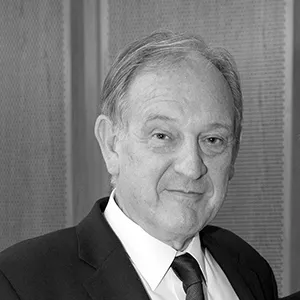
A graduate in Architecture of the Navarra University School of Architecture, where he was later a lecturer and Coordinator of the Architectural Refurbishment and Restoration specialisation programme. He has been Architect of the Historical Heritage Service of the General Directorate of Culture-Príncipe de Viana Institution of the Government of Navarra since 1986. During his time in this body his restoration work on various Navarran historic buildings and ensembles has been honoured with the National Prize for the Restoration and Conservation of Cultural Assets (1998), the Silver Medal of the Spanish Association of Friends of Castles (2000), the 2012 Europa Nostra EU Cultural Heritage Award, and the 2012 Rafael Manzano Prize for New Traditional Architecture, among other distinctions. He is a member of the Partal Academy and of the Catalan Sant Jordi Royal Academy of Fine Arts.
INTBAU Spain
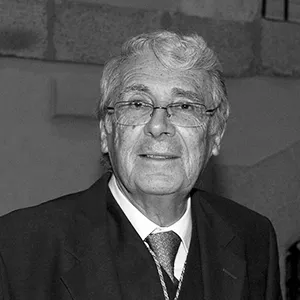
An graduate in Architecture of the Madrid Polytechnic University, and since 1966 professor of General Art History at the Seville University School of Architecture, where he is also Dean. He has devoted his life to the study of Classicism and in particular the Islamic world, and he has built new traditional buildings and restored numerous historic constructions in Spain, the US and the Middle East. He was Director-Conservator at the Reales Alcázares palace in Seville and the caliphal town of Medina Azahara near Córdoba, and chaired the works committee of the Royal Board of Trustees for the Alhambra and the Generalife. He is a member of many Spanish academic bodies, including the San Fernando Royal Academy of Fine Arts. His work has been distinguished with the Gold Medal for the Fine Arts, among other awards, and he is also Commander (with a plaque) of the Civil Order of Alfonso X the Wise. He also won the Richard H. Driehaus Prize for Classical Architecture in 2010, prompting Richard Driehaus to institute a prize in Spain bearing his name – the Rafael Manzano Prize – and thereby originating the initiatives run today by this Foundation and giving rise to all that we do.
University of Lisbon
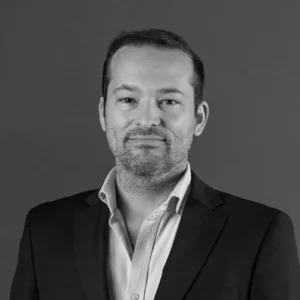
PhD in Urbanism from the University of Lisbon and Executive MBA from AESE Business School. His professional work focuses on architecture, urbanism, housing, spatial planning, and public governance. He served as Municipal Director at Cascais City Council, with responsibility for housing, urbanism, spatial planning, municipal projects, and economic activities. He has also worked as an advisor on territorial planning and urban policy for leading municipalities. He is an Invited Assistant Professor at the Faculty of Architecture of the University of Lisbon, where he teaches in the Master’s and PhD programmes in Urbanism and supervises research work. As a consultant, he has developed projects in Portugal, Angola, Cape Verde, Mozambique, and Timor-Leste, with a particular focus on strategic planning, urban development, territorial cohesion, and public policy evaluation. He was awarded the Archiprix Portugal Prize in 2013 and the Caixa Geral de Depósitos Academic Merit Prize for Urbanism in 2012. In 2014, he co-founded the Portuguese Academic Journal of Architecture and Urbanism.
University of Lisbon
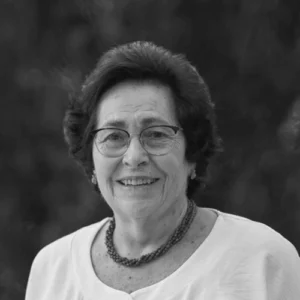
Agricultural Engineer with a PhD in Agronomic Sciences —Soil Sciences— from the Technical University of Lisbon, and an Agregação in Environmental Geochemistry from the same university. She is a retired Full Professor at the Instituto Superior de Agronomia, University of Lisbon, where she taught in the fields of Environmental Geochemistry, Geology, and Geomorphology. She is a member of the teaching staff of the PhD programme in Sustainability Sciences —REASOn | Resources, Food and Society— at the University of Lisbon. Her main research areas are Soil Sciences, Environmental Geochemistry, phytoremediation —phytostabilisation— of soils in degraded or contaminated areas, weathering of rocks and minerals, landscape degradation and conservation, geomorphology, and the assessment of landscape stability or instability through the morphogenesis/pedogenesis rate.
Lisbon City Council
He graduated in Architecture from Universidade Lusíada de Lisboa in 1997, with a specialization in Architecture from the IPGM of Universidade Lusíada and from the Barcelona School of Architecture in 1999. Between 1999 and 2002, he was an invited professor of fifth-year Architectural Design and Urban Drawing in the Department of Architecture at Universidade Lusófona. He was Director of the Urban Planning Department at Almada City Council between 2008 and 2022 and is currently Director of the Urban Planning Department at Lisbon City Council. He is an Invited Assistant Professor in the Integrated Master’s Degree in Architecture, teaching the third-year course in Urbanism and Territorial Planning at the Lisbon School of Architecture, University of Lisbon, during the 2025/2026 academic year. He is also the elected delegate for Lisbon and the Tagus Valley to the Assembly of Delegates of the Order of Architects.
Lisbon City Council
Álvaro Jorge Queiroz Fernandes holds a degree in Social Work by the Higher Institute for Social Work of Lisbon and a Masters in Sociology of Labour and Organizations from ISCTE where he defended, in 2002, a Dissertation on Unpaid Work in Non-profit Organizations. He has 38 years of professional experience in Municipalities: Sintra and Lisbon. He has been working in the Municipality of Lisbon for more than 25 years. After a short experience in the sectors of Education and Training he has worked for more than 20 years in Culture, Urbanism and Urban Rehabilitation: in the Municipal Libraries Network, in cultural promotion and participation projects and in Project Access – Culture for All; in Urbanism and Urban Rehabilitation he was part of the multidisciplinary intervention teams of the Bairro Alto and Bica Project Office and the Eastern Territorial Intervention Unit. Since 2015, he has been working in Urban Planning Department in the Division for Regeneration of Urban Areas of Illegal Genesis.
Lisbon City Council
Ana Marçal is Head of the Monitoring Division at the Department of Urban Planning of Lisbon City Council, where she oversees both the monitoring of planning instruments and urban policies and the production and dissemination of urban information. Within this framework, the Lisbon Urban Information Centre (CIUL) operates under her responsibility as a key facility supporting these functions, promoting access to data, fostering knowledge production, and reinforcing communication, research, and public engagement around the city. With a background in information systems, documentation sciences, and urban management, her work bridges technical knowledge and communication, with a strong focus on making urban data and processes accessible to diverse audiences. She has extensive experience in developing collaborations with universities and international institutions, organising events, exhibitions, and publications, and fostering dialogue between academia, practitioners, and the wider public. She is also involved in initiatives related to public participation and civic engagement in urban planning processes.
Lisbon City Council
Architect specializing in Urban Planning and Management, with a distinguished career dedicated to the urban development of the city of Lisbon. He currently serves as a senior advisor within the Support Office for the Director of the Urban Planning Department at the Lisbon Municipality (Câmara Municipal de Lisboa). Throughout his extensive tenure with the Municipality, he has held numerous high-level leadership and advisory positions, including: Director of the Strategic Projects Department, Director of the Parque Mayer Project Unit, where he worked in close collaboration with the internationally renowned architecture firm Frank Gehry Partners, Coordinator of the Central Axis Working Group, managing major urban interventions across Lisbon’s primary avenues, Senior Urban Advisor to the City Councillors for Urban Planning, Architect Manuel Salgado and Engineer Ricardo Veludo, and Municipal Expert within the Urban Management Department. As an official representative of the Lisbon Municipality, Architect Folgado has served on numerous architecture competition juries. He has also acted as the municipality’s liaison to prominent public and academic institutions, including the Santa Casa da Misericórdia de Lisboa, the Institute for Housing and Urban Rehabilitation (IHRU), the University of Lisbon, Nova University of Lisbon, Iscte – Instituto Universitário de Lisboa, the Beato Creative Hub / Unicorn Academy, and INFARMED. Additionally, he represented the city on the Licensing Committee for Large Commercial Areas of Lisbon and the Tagus Valley.
Universidade Portucalense
Assistant Professor at Universidade Portucalense (UPT), Department of Architecture and Multimedia Gallaecia, and Researcher in Urbanism and Planning at the UPT branch of CIAUD. PhD under the program Peripheries, Sustainability and Urban Vitality at the Universidad Politécnica de Madrid (2011), Master in Contemporary Architectural Culture and Modern Society Construction from the Technical University of Lisbon, and an Architect from the University of Porto. Principal researcher of the embryo project “MetroPoLis. Lisbon and Porto shared metropolis. Sustainable tourism beyond city center” (CIAUD, 2023-25). Member of CNADS – the National Council on Environment and Sustainable Development (2024-…). Awarded by the project Urban Logic, Smart Cities ideas competition from Cologistics, Interreg European program Portugal – Spain (2022). Presently on the Board of OA – the Portuguese Association of Architects, and a member of AUP – Portuguese Urban Planners Association and INTBAU Portugal. Jury of Europan Competition in 2025. Coordination of Habitar Portugal 1974-2024 edition and Cities and their Thesis exhibition project in Portugal.
Lisbon City Council
Patrícia Bernardo holds a degree in Architecture from the Faculty of Architecture of the Technical University of Lisbon (1997) and a postgraduate degree in Rehabilitation of Architecture and Urban Centres from the same institution (2003), with a solid academic background in architecture and urban rehabilitation. From 1998 until February 2026, she worked at the Municipality of Almada, covering multiple areas of urban planning and urban management. Through her work across different fields, she acquired extensive knowledge of technical and regulatory procedures, developed an integrated perspective between urban planning and the local economy, and participated in planning initiatives of greater scope and complexity. Throughout her career, she has also carried out coordination and organization duties for technical and cultural events of municipal relevance. She is currently Head of the Division for the Reconversion of Urban Areas of Illegal Genesis, whose main objective is to promote the necessary actions for the reconversion of AUGI areas in the Municipality of Lisbon, through the development of urban planning instruments and the coordination, promotion, and monitoring of the various actions required for their regularization, with the support of property owners and their respective Joint Administration Committees.
Architect
Thiago Bradell is an architect based in Sintra, Portugal, whose work is deeply rooted in the preservation and renewal of traditional Portuguese architecture. His interest in architecture began at an early age, when he witnessed the restoration and expansion of his family home, Quinta de São Thiago, a 16th-century property in Sintra. This experience shaped his understanding of architecture as both a transformative act and a responsibility towards future generations. Throughout his career, he has dedicated his practice to creating buildings that respect local heritage, landscape, scale, and history. His work includes the restoration and adaptation of historic houses, as well as new projects inspired by vernacular architecture, local construction techniques, traditional materials, and the specific character of each region. Rather than imposing a design on a place, he seeks to understand each site through its orientation, views, winds, access points, sounds, and silences, allowing these qualities to guide the project. In his atelier, hand drawing and watercolour remain central to the design process. For Thiago Bradell, drawing is a way to explore scale, test alternatives, imagine spaces, and communicate the spirit of a project to clients. His small studio, formed by a close team of architects and a designer, works with a strong commitment to craftsmanship, detail, and personal involvement in every stage of the process. Through his projects and regular presence on construction sites, Thiago Bradell also promotes the transmission of traditional building knowledge, working closely with craftsmen and encouraging the continuity of techniques that are at risk of disappearing. His work reflects a search for timeless, locally rooted architecture that looks to the past while contributing to a more beautiful and thoughtful future.
Landscape Architect
Professor at the University of Lisbon / Instituto Superior de Agronomia, in the Landscape Architecture programmes. A founding partner of Topiaris, he graduated from the Instituto Superior de Agronomia of the University of Lisbon and holds a PhD from the University of Massachusetts, where his research focused on cultural landscapes and greenway networks at the metropolitan scale. His projects span Portugal, Angola, Gabon, Timor and Switzerland, and include landscape planning, urban design and the restoration of historic gardens, among them Parque Verde de Carnide in Lisbon, the Tagus Estuary Riverside Linear Park in Vila Franca de Xira, the Tropical Botanical Garden of Lisbon, and the António Borges Gardens in the Azores. His academic career has developed in parallel and with equal depth: he teaches Theory, Planning and Design in Landscape Architecture at the Instituto Superior de Agronomia, and has been a visiting professor at universities in Spain, China, Italy and the United States. He publishes articles in academic journals and was co-founder of both the Professor Caldeira Cabral Landscape Architecture Research Centre, now integrated into the LEAF centre, and the Portuguese Greenways Association. In 2019, he was awarded the Fabos Silver Medal by the University of Massachusetts. He is a member of the Lisbon Academy of Fine Arts.
Architect
João Santa Rita is an architect who graduated from the Escola Superior de Belas Artes de Lisboa, where he completed his studies in 1983. In 1990, together with architect José Santa-Rita, he founded the studio Santa-Rita Arquitectos, and in 2016 he created the atelier Santa-Rita e Associados. He has developed an extensive professional, academic and institutional career. He was elected President of the Ordem dos Arquitectos for the 2014-2016 term and has served as Vice-President of the International Congress of Portuguese-Speaking Architects, CIALP. He is an invited member of the Akademie für Baukultur, in Germany, and was invited to join the International Scientific Committee of A.D.A.M. — Archive of the Design of Mediterranean Architecture, at the Catholic University of Tirana, in Albania. Since 1998, he has been Associate Professor at the Universidade Autónoma de Lisboa. He was also Visiting Professor at the University of Minnesota, in the United States, during the 1999-2000 academic year, and has been invited as a critic of academic work at various international institutions, including the Southern California Institute of Architecture, Columbia University, the University of Granada, Savannah College of Art and Design, Rhode Island School of Design, Hawk University Hildesheim, ISCTE, Instituto Superior Técnico, and the Faculty of Architecture of the Technical University of Lisbon. He has participated in seminars and conferences in numerous countries, including Germany, Brazil, the United States, Spain, France, Hong Kong, Italy, Ireland, Libya, Macau, Poland, Portugal, the Czech Republic and Russia. His work has been published in Germany, Argentina, Chile, Spain, the United States, England, Italy, the Netherlands, Japan, Portugal and Switzerland, and he has taken part in exhibitions in Germany, Belgium, Brazil, Canada, Chile, Denmark, Scotland, the United States, Spain, Finland, France, the Netherlands, Hong Kong, England, Italy, Macau, Portugal, Poland and Russia. In 2012, he was selected for the Mies van der Rohe Award for the rehabilitation of Casa dos Bicos, carried out in co-authorship with Manuel Vicente. He has also been a patron of several cultural initiatives, including the exhibition “Piranesi – Caprichos e Arquitecturas” at the Palácio Nacional da Ajuda, the installation of ArCo — Centro de Arte e Comunicação Visual at the Mercado de Xabregas, and the expansion of its facilities at Quinta de São Miguel.
University of Lisbon
Carlos Dias Coelho (1962) graduated in Architecture from the Faculty of Architecture – Technical University of Lisbon (1984) and earned a PhD in Urban Planning (2002) with the thesis “The Urban Layout Complexity.” He has taught since 1988 and is a Full Professor of Architecture and Urbanism at the Lisbon School of Architecture, where he also coordinates the formaurbis LAB research group and served as dean from 2019 to 2024. He has been an invited professor at the École Supérieure d’Architecture Paris-La Villette, ETSAB/Universitat Politècnica de Catalunya, and École d’Architecture de l’Université Laval/Québec, and is a Fellow of the University of Tokyo. Since 1992, he has dedicated himself to researching the form of the city and public space to contribute to a better understanding of the contemporary city and its emergent problems. He regularly participates in conferences and publishes articles on urban morphology and morphogenesis. His work has received several awards, including the Prémio José de Figueiredo 2008, awarded by the National Academy of Fine Arts; the Prémio Internacional Inácio de Lecea 2007/2008, awarded by the Public Art and Urban Design Observatory of the University of Barcelona; and the Merit Distinction, awarded by the Director of the Technical University of Lisbon in 2009.
University of Lisbon
Architect, urban planner, and academic specializing in Architecture, Urbanism, and Sustainability. He is currently Full Professor of Architecture in the Department of Civil Engineering, Architecture and Georesources at Instituto Superior Técnico, University of Lisbon, and serves as Vice President for Sustainability and Infrastructure at IST. He holds a degree in Architecture from the Faculty of Architecture of Lisbon, a Master’s degree in Regional and Urban Planning from the Faculty of Sciences and Technology of NOVA University Lisbon (FCT NOVA), and a PhD in Environmental Sciences from NOVA University Lisbon. In 2005, he founded the GEOTPU.LAB research group, dedicated to urban planning, architecture, territory, and the environment. Since then, the group has trained researchers who carry out work across the countries of the Community of Portuguese Language Countries (CPLP) in areas including sustainable urbanism, urban energy efficiency, urban planning, and renewable energy in the built environment.
The students should arrive at the Summer School accommodation: Alfredo de Sousa Residence, located at the Campolide Campus of the Universidade Nova, during the afternoon. An introduction of the faculty and participants will take place and the program structure and organising entities will be presented before dinner.
In the morning, an institutional welcome will be scheduled. A bus will take the group throughout the day to visit and analyze the Misericórdia area in Lisbon to study, photograph and draw the local architecture and building details, as well as to analyse the urban fabric. In the evening, there will be lectures on Lisbon’s urban history.
The group will travel by metro to the City Centre and visit the Paços do Concelho. The group will visit and analyse the Alfama area to study, photograph, and draw the local architecture and building details, as well as to analyse the urban fabric. In the evening, there will be lectures on Lisbon’s traditional architecture and construction.
A bus will take the group throughout the day to visit and analyse a formerly rural area within northern Lisbon, Carnide. The visit will be long enough to study, photograph, and draw the local architecture and building details, as well as to analyse the urban fabric. In the evening, there will be lectures on the northern area of the city of Lisbon.
The day will be devoted to measuring, drawing, and studying the area where the project will be developed, in order to establish the necessary groundwork for the design work to be carried out the following week. In the afternoon, lectures will be given on the history, culture, and current context of the area.
The group will gather, review, and complete the work already developed. In the afternoon, a round table on the new development of Lisbon’s Northern Area will be held, followed by a discussion.
In the morning, there will be demonstrations of traditional building techniques. In the afternoon, various case studies will be identified and several working groups will be formed. Later, lectures on new traditional architecture and urban design will be held.
Free day. In the afternoon, an introductory lecture will be given on topics relevant to the work of the second week.
Throughout the day, participants, divided into several groups, will use the work carried out in previous days to design different improvement proposals for the studied areas. In the afternoon, lectures on new traditional architecture and urban design will be held.
In the morning, the final versions of the design proposals will be completed. In the afternoon, a public presentation of the design proposals will be scheduled. In the evening a final group dinner will be organised.
Closing of the program will take place in the morning.

The Traditional Building Cultures Foundation seeks to foster and promote the study, protection, teaching, dissemination and conservation of the traditional building, architecture and urbanism characteristic of the various regions of the world

The Câmara Municipal de Lisboa is addressing the challenge of the city’s sustainable development by balancing the preservation of its identity and its rich architectural and cultural heritage while responding to new urban needs. In this context, it supports and actively participates in this program as part of its commitment to the future of Lisbon

The Universidade Nova de Lisboa is a public institution committed to teaching, research, and collaboration with its community. With a strong international focus, it participates in this course as part of its contribution to academic debate and the development of the city.

The Fundação Serra Henriques was established in 1997 with the statutory mission of carrying out and promoting cultural, scientific and educational activities of public interest, with special emphasis on the study and preservation of heritage, urban planning and territorial organization.

The Portuguese section of the International Network for Traditional Building, Architecture, and Urbanism (INTBAU) is an active network of individuals and institutions dedicated to creating human and harmonious buildings and places that respect local traditions. It brings together those who design, build, maintain, study, or appreciate traditional construction, architecture, and places.

INTBAU Spain aims to promote traditional construction, architecture and urban planning. It serves as a platform for collaboration and information exchange, while contributing to the promotion of other related initiatives organized by its members and other institutions linked to the network itself.


ENERO Arquitectura is a firm founded in 2006 that develops projects both nationally and internationally, for public and private clients. It specializes in heritage interventions, as well as in the hospitality and healthcare sectors. Its director, Francisco Ortega, was awarded the Rafael Manzano Prize for New Traditional Architecture in 2025.

‘HEURE BLEUE’ Architecture.

The Fundación Arquia was created in 1990 and, since its inception, its objective has been to promote and disseminate projects of a cultural, social, welfare, professional and educational nature in the field of architecture, building, design and urban planning.