Portada » Initiatives » Awards » Building Arts Awards » Laureates » Laureates 2021



Jordi Domènech Brunet is a master mason from El Masnou (province of Barcelona), where at an early age he started working with his father in various masonry tasks. He has always striven to study, master and promote the tradition of his trade, and his great passion has been for building vaulted masonry. This has made him one of the world’s top specialists in the building of Catalan timbrel vaults.
Timbrel vaulting is an inexpensive and effective building technique especially developed and employed in Catalonia, as well as in eastern Spain generally. It has been used to span spaces with multiple geometries, with very diverse systems and dimensions. It has also been used in particular to build vaulted staircases, for which it remains a fully competitive option, as well as handsome and durable. Thus masonry shells are known for being slender and light, and along with specialist labour, their construction requires very simple materials: thin flat bricks and plaster-of-Paris mortar.
These vaults had their heyday in the late 19th and early 20th centuries. Catalan Art Nouveau architects and craftsmen excelled in exploring their many possibilities, for as well as spanning large spaces the method can also embody the organic forms that are hallmarks of that movement. This is why it was one of the building methods preferred by many architects of the time, such as Antoni Gaudí, Josep Puig i Cadafalch, Lluís Domènech i Montaner or Cèsar Martinell. Another key figure in spreading the technique was the Valencian Rafael Guastavino, who popularised it in the US and employed it in the ceilings of some of North America’s best known buildings.
After this period the tradition subsisted, but its popularity declined to a critical low in the latter decades of the last century, with the ascendency of steel and reinforced concrete. This meant that the trade was sustained by just a handful of masters, which in turn meant that it was hard to find good practitioners able to work with such techniques and to train apprentices. But today a growing number of architects and masons take an interest in shell vaults. They value not just their economy and aesthetic qualities but also their greater durability and sustainability as compared to other structure types.
Jordi Domènech is one of the master masons who have done most to deploy and disseminate this technique, both through his trade as a master builder and his work in teaching and training masons, builders and architects. He has given many workshops and courses with various institutions and has trained several apprentices, notably including Tatsuhei Taniguchi, who came from Japan, drawn by the work of Gaudí, and has stayed for more than 20 years, working alongside Jordi to the point of himself becoming a master of these structures.




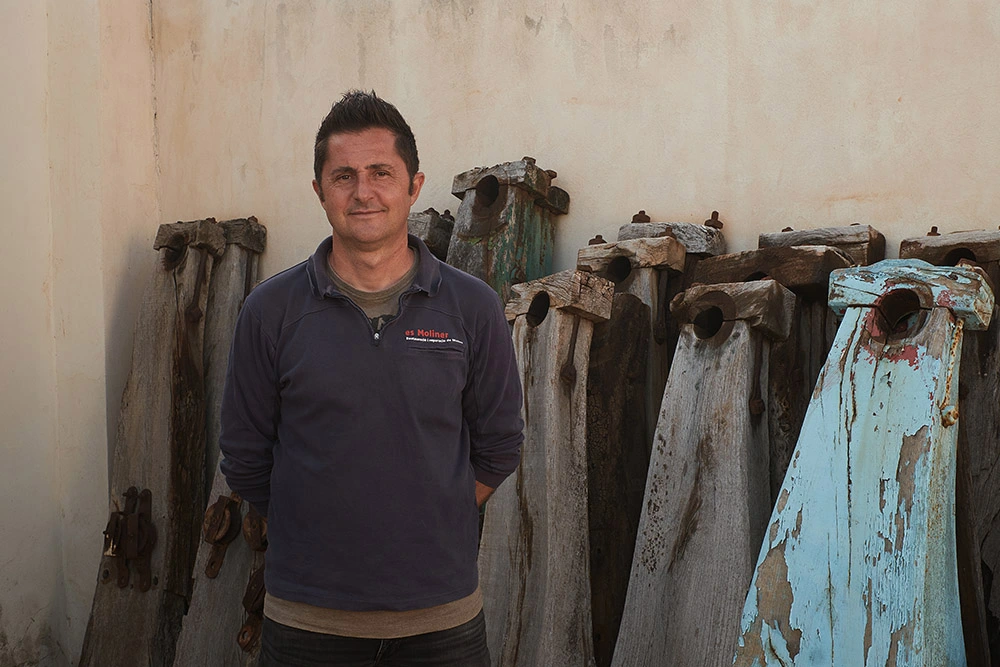
Miquel Ramis Bordoy is the third generation of his family devoted to the repair and restoration of mills on the island of Mallorca, which involves working with both iron and wood. He heads the firm Es Moliner, set up in 1952 by his grandfather, who took up this trade together with a blacksmith whose workshop happened to be near his. Currently Miquel restores mills fully from their structure to their machinery, applying various woodwork and metalwork techniques according to each mill type and its characteristic materials and technology. Since 2018 he has held a master artisan’s certificate in the “Master of Mills” category, granted by the Mallorca Island Council.
Miquel took an interest in the trade as a child, when he would play in the family workshop as his father and grandfather worked. At the age of 16 he began assisting his father in the summer. He also took a vocational course in mill restoration given by the Island Council through what was then known as FODESMA, as the trade was becoming lost. A workshop was set up on the Council’s premises for mill work and Miquel Ramis joined it for a time, though he soon returned to the family firm. He says it is there where he really learned the trade, thanks to the expertise that his father and grandfather were able to pass on. In 1996 he took the firm over.
On Mallorca the mills are mostly windmills, as there are hardly any watercourses for watermills except for a few mountain streams. The mills built were mainly groundwater windpumps, though there were also flour mills, some of which remain. But the flour mills are the oldest on the island and indeed the early pumping mills were made in much the same way. In more recent mills, some of the parts that used to be made of wood were replaced with metal. Later mills were designed to swivel with the wind, with a tail acting as a rudder.
Miquel’s most notable work includes windpumps such as those on the S’Avall estate or at the Palma Airport Control Centre, and flour mills such as those of the “Possessió Sa Torre” hotel, “d’en Blanc” in Llubí, or “Possessió de Xorrigo”.
Miquel has also worked actively to disseminate the island’s rich heritage of mills. He received the
“Molino de Oro” (golden mill) award in 2016 from the Association of Friends of Mallorcan Mills and took part as a speaker and tutor in the 1st Mill Expert Course held by that association, as well as in the 11th International Mill Congress (2018) held by the Mallorca Island Council and the Association for the Conservation and Study of Mills (ACEM).


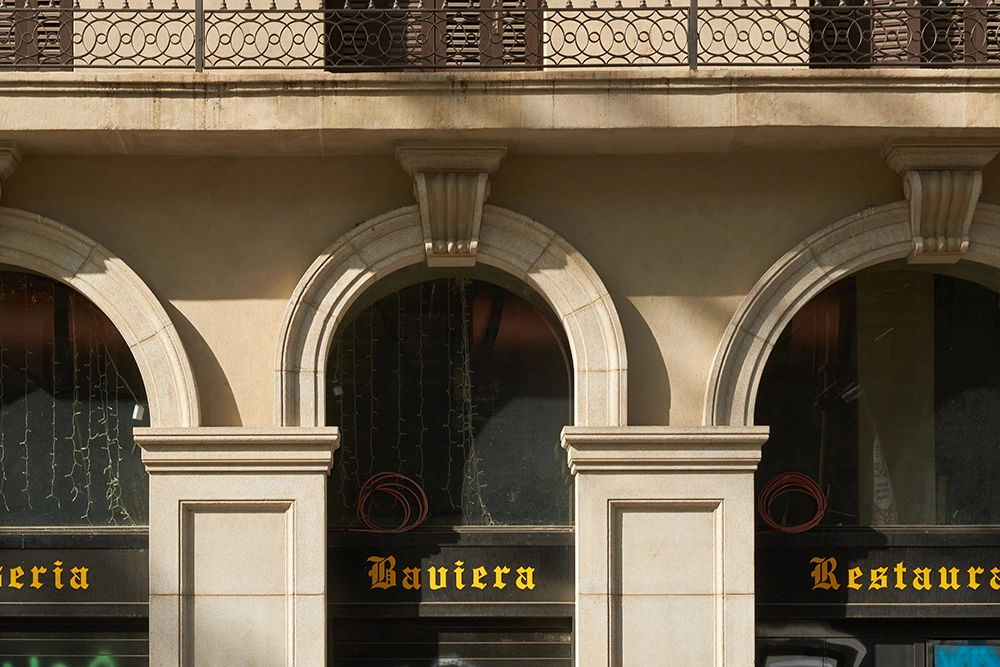
Cristina Thió is a restorer who graduated in fine arts. Her teachers included Truca Heredero, who communicated a passion for mural painting, stucco, frescos and sgraffiti; and Antoni Pedrola, from whom she was able to learn the various pictorial techniques. She started working with these techniques at the age of 24 and has steadily honed her skill with masters of each craft. Later she set up her own firm, Chroma, with which she seeks to preserve and also to promote and disseminate the traditional techniques and materials defining the townscapes she works in.
Her 30 years’ experience in the trade have allowed her to work with renders from various periods and with diverse characteristics, in Baroque, Classical, Art Nouveau, Novecentiste or Art Deco buildings: polychromy, fresco, mezzo-fresco or secco painting, egg or rabbit-glue tempera, sgraffiti (decorative layered plaster) of various kinds, stucco and hot-ironed stucco, or mouldings and renders using all sorts of gypsum, ceramics and plasters. She works mostly with mineral paints, especially silicate; lime mortars, both hydraulic lime, which she uses for building, and air lime, which she uses for renderings; watercolours for facade restoration; and lime-washes.
Barcelona is a city abounding in sgraffito and stucco, of which there is a highly rich tradition and heritage. In the city’s various historical periods these renders have been applied with similar materials but with diverse properties, compositions and proportions. Cristina has always sought to explore her field through new challenges, which has made her a great connoisseur and advocate of these traditional crafts and techniques in their manifold forms.
She also works extensively to promote awareness of age-old trades and to disseminate and preserve them, regularly tutors students on national and international internships and gives many courses and workshops for various schools and associations, such as Grup de Recuperació i Estudi de la Tradició Arquitectònica (Greta), Escola Origens or postgraduate courses with Escola Sert in Barcelona.
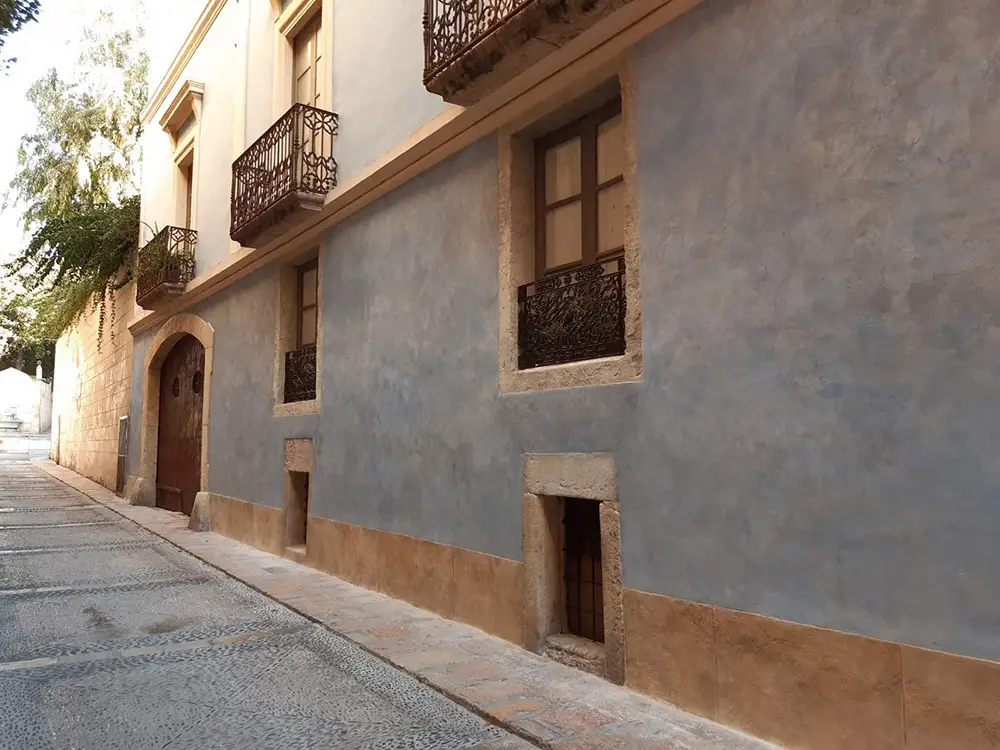


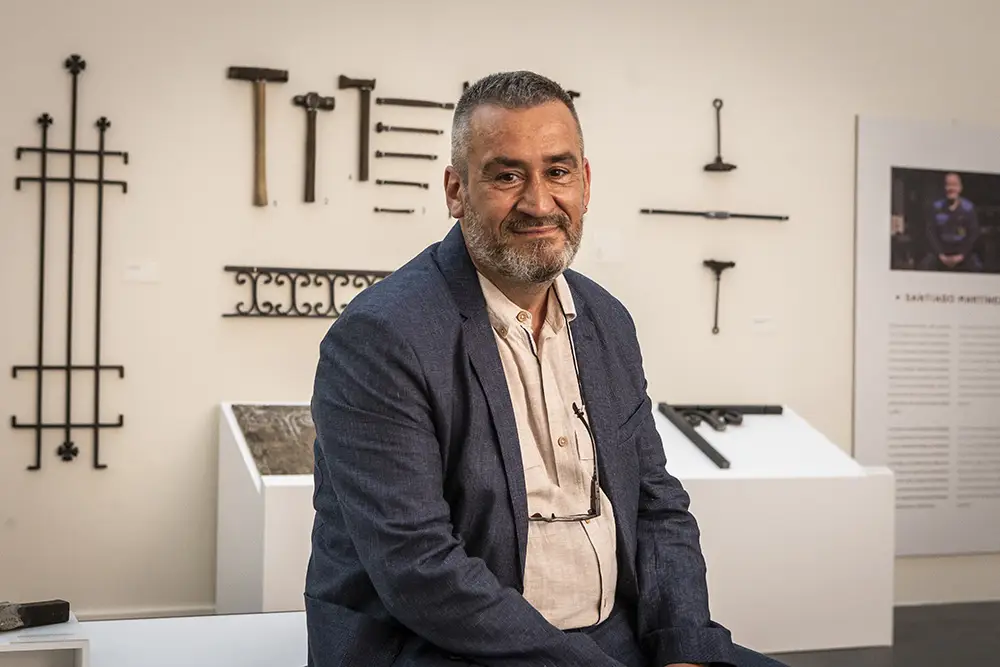
Santiago Martínez Otero, better known as Chago, is a master blacksmith specialised in ironwork in
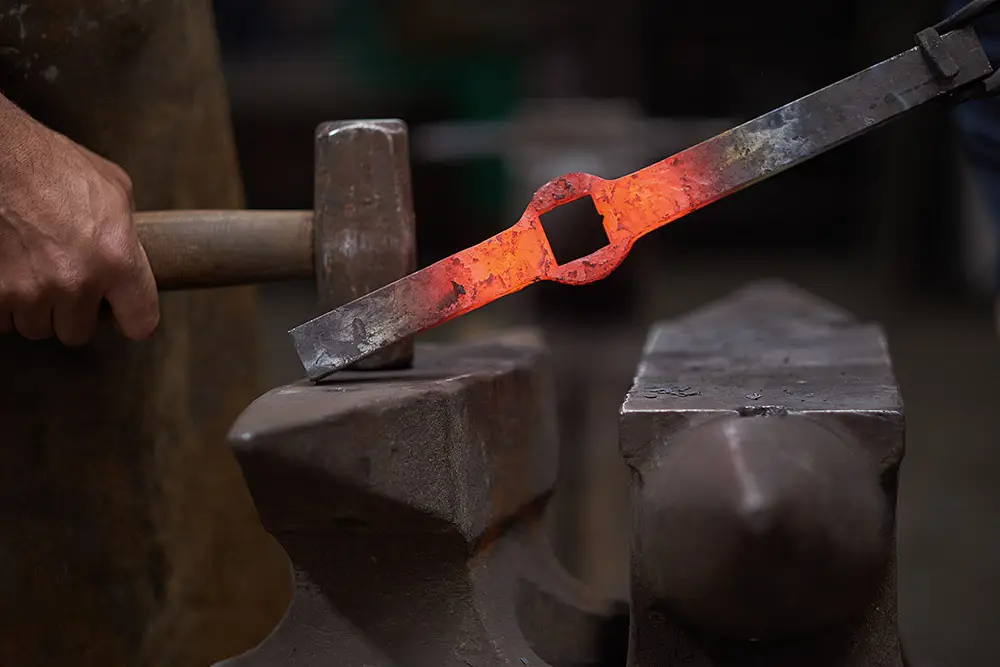
construction and restoration. This was not his family trade but he took an interest in it as a child, fascinated by a forge on his way to school. He began his training at the Mestre Mateo Trade and Craft School in Santiago de Compostela, promoted by the architect and then mayor of the city Xerardo Estévez, where he was tutored by the blacksmith Antonio Campos. He soon left the school to work in various workshops where he became familiar with the diverse branches of metalwork, though without losing sight of his prime interest in forgework. In the nineties he founded his own business and set out to study his trade’s tradition and the restoration of older ironwork. His urge to rediscover some of the blacksmithing know-how that had become all but lost prompted him to constantly experiment and to travel about Galicia and Asturias to meet elderly blacksmiths in places such as Taramundi or Santa Eulalia de Oscos so as to find out how each one worked. Thus he steadily explored techniques such as forge welding, chisel cutting and embossing, among many others.
His research led him to look in particular into the crucial role of joints between wrought-iron pieces allowing them to absorb the large expansions and contractions that iron undergoes with temperature changes, along with the critical contact points between ironwork and masonry, vital to assuring durability. He found that the solutions which lasted best and caused least harm to masonry were those with lead at the contact point with the metal, preventing any transfer of stresses and also protecting the iron by sealing out oxygen. This led him to experiment with various lead jointing techniques, with molten lead or cold working, and to study and optimise lead purification processes, forms of tools and clamps, etc.
Santiago has also become an expert in historic ironwork. The iron produced today is rolled, so it
behaves differently from iron obtained by reduction. There remain few practitioners such as Santiago who identify, are able to date and know the characteristics of the iron of each period. For lack of knowledge, work is often done which may be suitable for rolled iron but that can harm historic ironwork. He has also revived some highly durable finishing and preservation techniques, especially for older irons, such as bluing in the forge with traditional products like natural wax, oil or graphite.
Over his career he has worked on the ironwork of monumental buildings such as the cathedrals of
Santiago and Tuy, historic palaces such as those of Gelmírez or Rajoy, or the Castle of San Felipe,
allowing him to take on many challenges and to go on exploring the solutions developed by the old master blacksmiths for tackling countless building problems.
He is also highly active in disseminating the techniques of his trade through the various courses he gives, the apprentices he regularly trains and the forgework meetings and events he takes part in.




It was published on the occasion of the Richard H. Driehaus Building Arts Awards 2021.
This initiative was organized by INTBAU (International Network for Traditional Building, Architecture and Urbanism) , with the collaboration of the Ministry of Transport, Mobility and Urban Agenda, the Ministry of Culture and Sports, the Rafael Manzano Prize of New Traditional Architecture and the Council of Architecture Institutes of Spain.
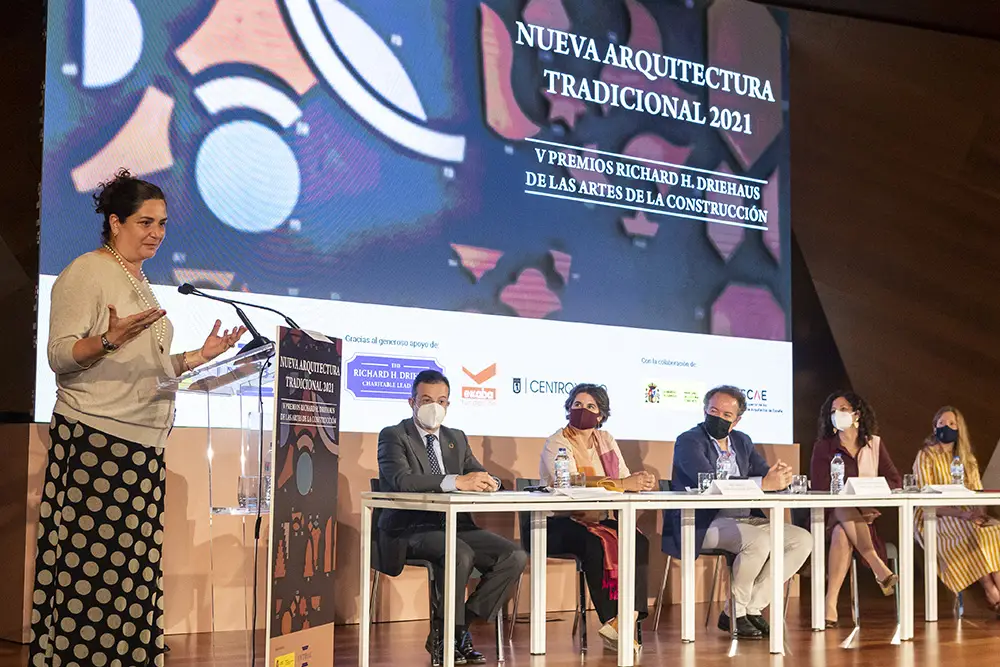
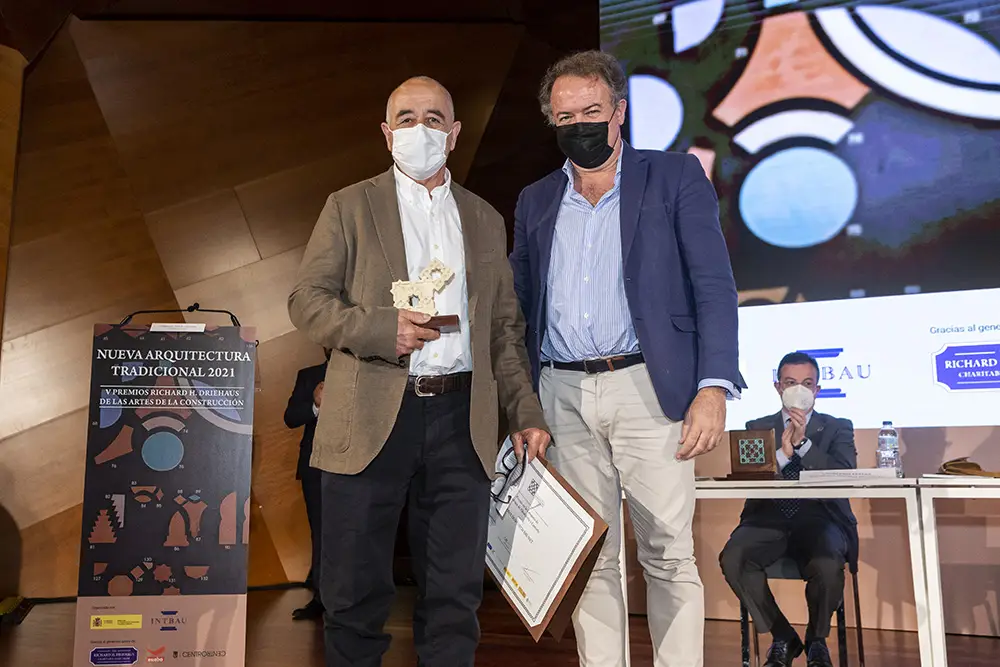
The Building Arts Awards 2021 Ceremony was held on 3 June 2021 in the auditorium of CentroCentro at Madrid City Hall.
The event was presided over by Luis Lafuente Batanero, Director General of Cultural Heritage of the Madrid City Council; Marta Callejón, Deputy Director General for Architecture and Building at the Ministry of Transport, Mobility and Urban Agenda; Ana Cabrera Lafuente, Deputy Director General of the Institute of Cultural Heritage of Spain at the Ministry of Culture and Sports; Harriet Wennberg, Executive Director of INTBAU; and Laureano Matas, Secretary General of the Spanish Council of Architects’ Associations. Alejandro García Hermida, Director of the initiatives promoted by Richard H. Driehaus in Spain and Portugal, served as master of ceremonies.




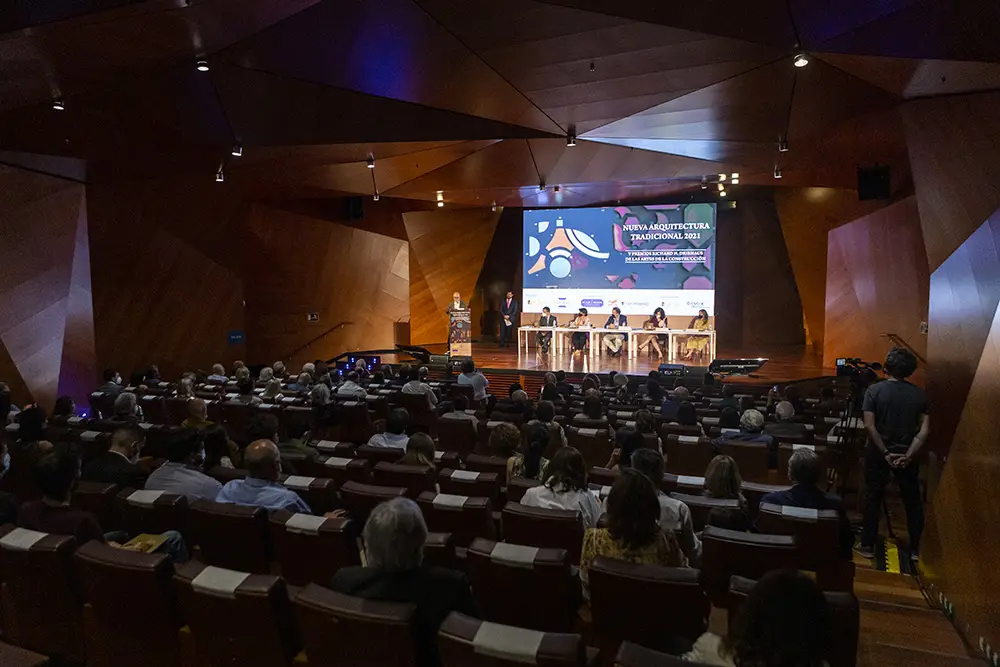

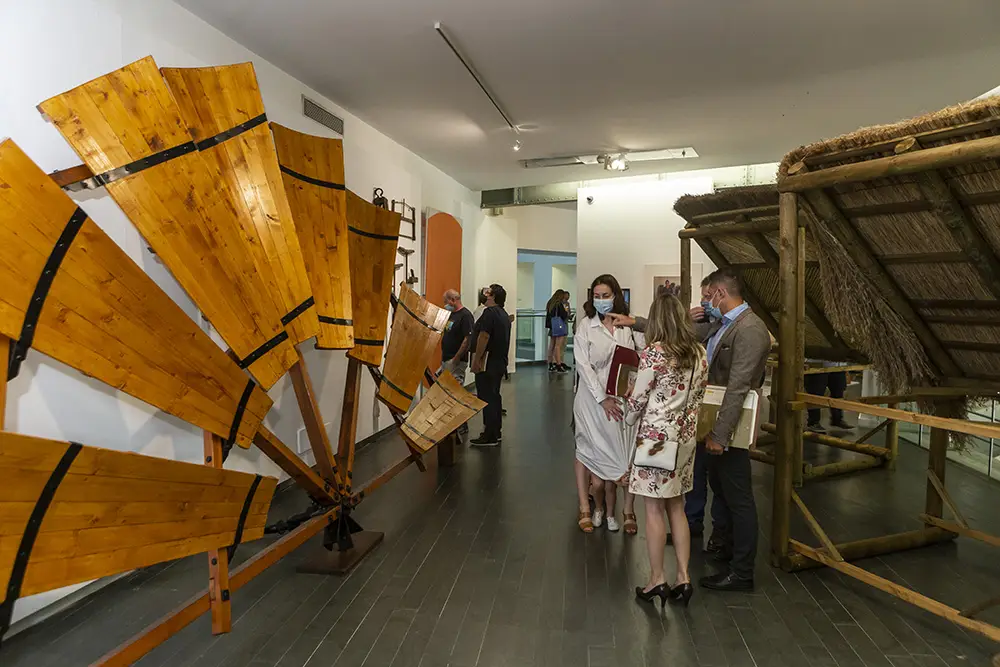
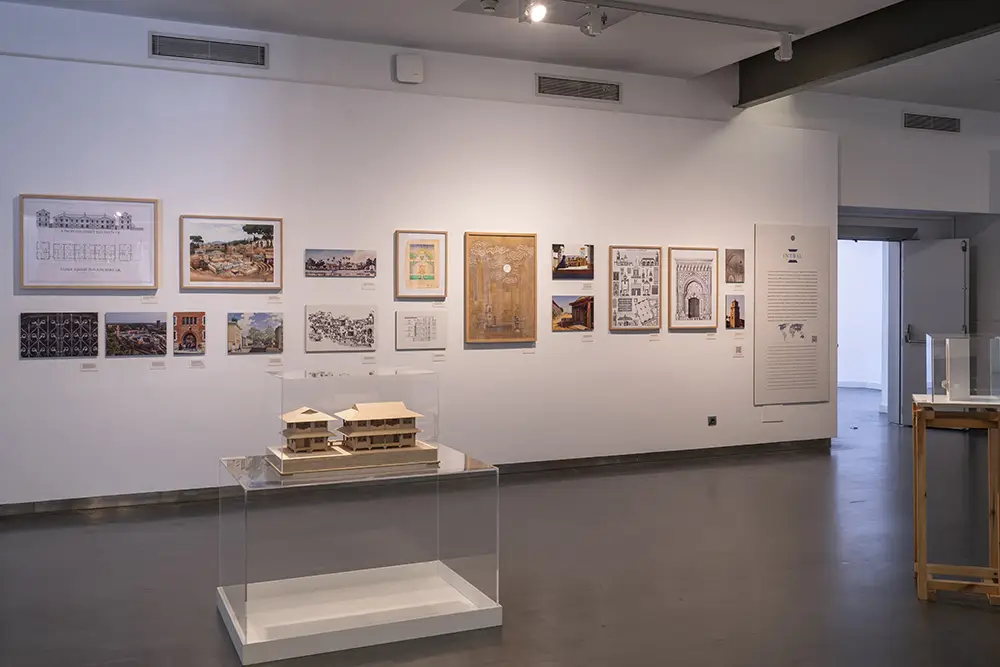
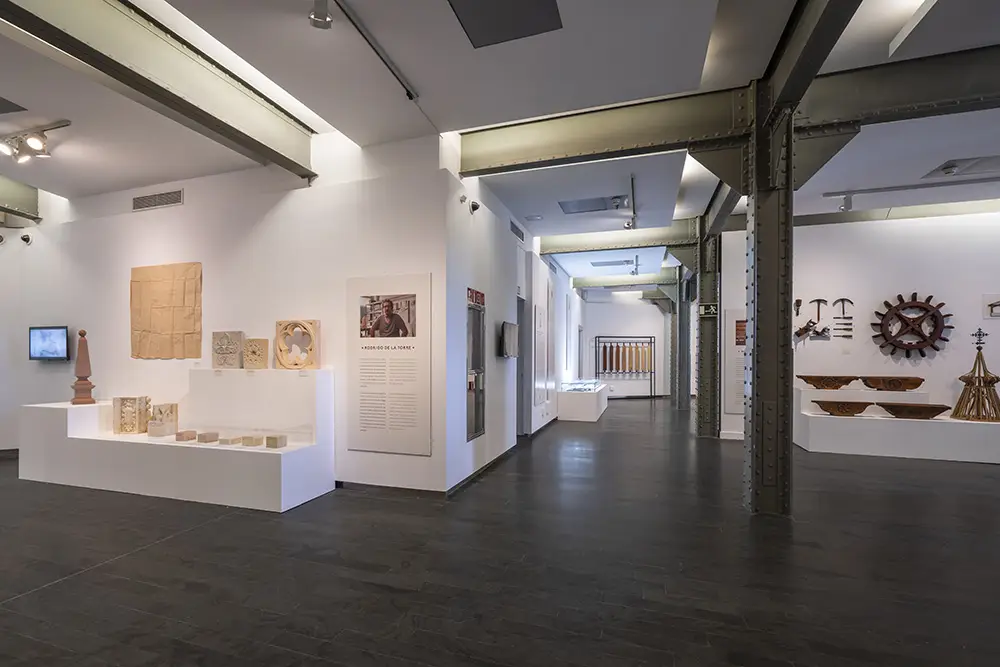
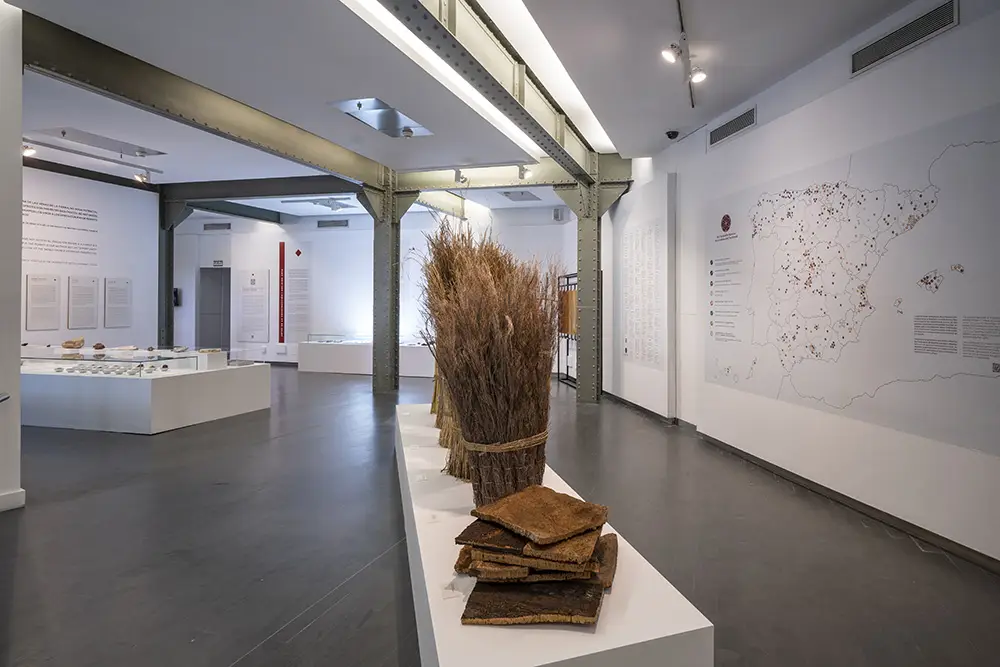
On 3 June 2021, the exhibition Timeless Architecture was inaugurated at CentroCentro, at Madrid City Hall. It presents a selection of materials, techniques and building crafts, as well as architectural and urban practices that are helping to keep traditional building traditions alive.
The exhibition is structured around the work carried out in recent years by INTBAU thanks to the generous support of the American philanthropist Richard H. Driehaus (1942–2021), who, in collaboration with numerous national and international institutions, promoted a series of initiatives in Spain and Portugal aimed at fostering traditional architecture and urbanism, the building crafts, and the conservation of cultural heritage.