
Portada » Initiatives » Awards » Building Arts Awards
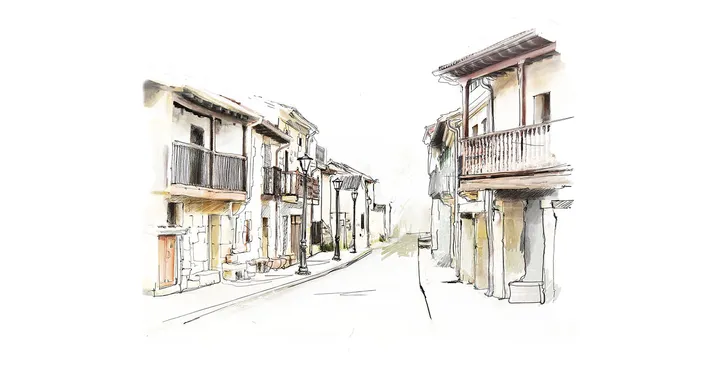
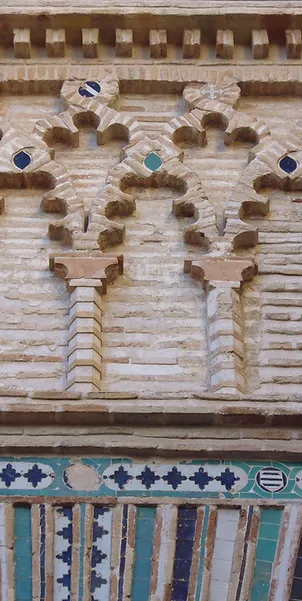
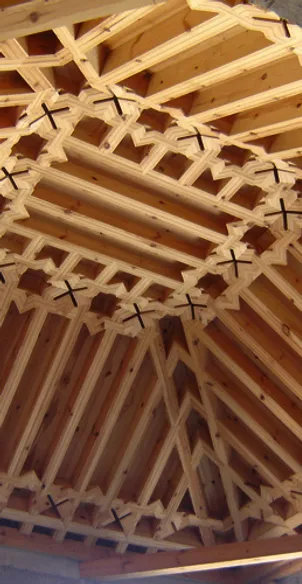
The Richard H. Driehaus Building Arts Awards are given in Spain to the most outstanding masters of the various traditional building trades, thus contributing to their preservation and continuation.
They are organised annually thanks to Richard H. Driehaus by the Traditional Building Cultures Foundation with the collaboration of INTBAU Spain, the Ministry of Culture and the Council of Architecture Institutes of Spain.
The traditional building arts have been collecting for centuries the knowledge of countless generations on the sustainable use of the resources of a place and the essential rules for the creation of beautiful and comfortable spaces and environments with them. It is these traditional arts that have given rise to the material heritage that we admire today and without them the long-term conservation of this heritage would be doomed to failure. They are the result of our culture and our territory, a sign of identity that makes the construction of each region unique, and constitute an irreplaceable accumulation of knowledge about the environment and how to inhabit it, not only with respect, but also with long-term benefit.
Yet today they are on the verge of extinction, as is, consequently, a vital part of our culture and heritage.
These awards aim to relieve this situation by encouraging recognition of building arts masters, generating interest in continuing these crafts, and promoting excellence in them. They highlight their most beautiful manifestations, those showing a neatest execution.
The traditional building works have been grouped into four categories for these prizes, each of which
is awarded a €10,000 award and a commemorative plaque:
The Jury is formed by a group of practitioners of various nationalities and of recognized prestige
in the field of traditional architecture defense. It includes representatives from the various institutions
collaborating in this initiative.
The members of the jury are: Jesús Adeva, Elena Agromayor Navarrete, Álvaro Fernández-Villaverde y de Silva, Leopoldo Gil Cornet, Rafael Manzano Martos, José María Pérez González (Peridis), Luis Prieto Prieto and María Pía Timon Tiemblo. Alejandro García Hermida presides this jury without voting rights except in the event of a tie.
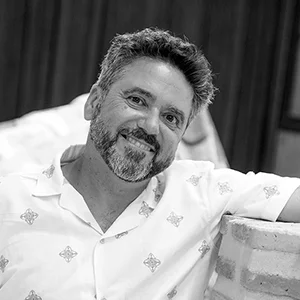
A master craftsman and builder belonging to the third generation of a family of master builders from Toledo. He is co-founder of the company Rehabilitaciones y Construcciones ADEVA SL, which has allowed him to explore other trades with the firm’s craftspeople. Working on the rich built heritage of Toledo has for Jesús been a source of ongoing education in traditional building materials and techniques. Over his career he has also participated in many courses and workshops on traditional building techniques, allowing him to steadily increase his knowledge of the trade and to come into contact with numerous masters of diverse building crafts. He has also given courses in the theory and practice of building on real worksites through various schools, media, and institutions such as the Toledo Heritage Consortium or the Castilla La Mancha University School of Architecture. In 2022 he obtained the Richard H. Driehaus Building Arts Award. His works have been presented in the exhibitions “Timeless Architecture” (Arquitectura Atemporal) 2022, in CentroCentro Madrid, and “Living Heritage” (Patrimonio Vivo) in 2023, in Santa Cruz de Toledo Museum.

She is an architect graduated from the Universidad Politécnica in Madrid and serves as an architect at the Spanish Cultural Heritage Institute (Ministry of Culture and Sport) within the Department of Interventions in Immovable Cultural Heritage, where she provides specialized technical advisory services and carries out the supervision and management of preservation projects related to cultural heritage in its broadest scope (traditional architecture, landscape, industrial heritage, defensive architecture, archaeology, religious architecture, etc.). She is also pursuing a PhD focused on the study of safeguarding instruments for Spanish rural traditional architecture. She coordinates the National Plan for Traditional Architecture and is a member of the research programme Heritage ensembles as tourism assets of the Community of Madrid – Problems and opportunities from a territorial perspective, through the research group of the Chair of Management and Intervention in Architectural and Industrial Heritage of the UPM.
As part of her work at the IPCE and her research activities, she has organised and participated in seminars on safeguarding tools and traditional building crafts, exhibitions on cultural heritage, numerous lectures on intervention criteria, the development of methodologies and management instruments for the safeguarding of traditional architectural heritage, as well as several publications.
She combines these activities with the development of restoration and rehabilitation projects, heritage valorisation initiatives, participatory workshops, design projects, and the provision of technical consultancy services in the private sector.
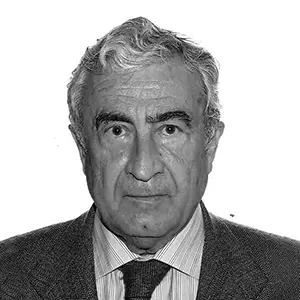
He graduated in Law in 1965. He served as a diplomat from 1967 to 1981, both at the United Nations headquarters in New York and at the Spanish Ministry of Foreign Affairs. He later worked as Director General of International Relations at REPSOL and Deputy Director General of Banco Hispano Americano. From 1997 to 2005, he served as Director of Patrimonio Nacional. He is a patron of several cultural institutions, including the Prado Museum, the Naval Museum, Hispania Nostra, Europa Nostra, and the World Monuments Fund. He is also a member of the Newport Preservation Society, where he has presented Spanish heritage in various seminars, and was a member of the Board of Versailles from 2003 to 2005. Having retired from the Spanish diplomatic service, he now devotes himself actively to the preservation of cultural heritage and natural landscapes. In 2015, he was awarded the Gold Medal for Merit in the Fine Arts by King Felipe VI, the highest honour in the field of fine arts in Spain. He is responsible for three National Monuments: the Palace of Santa Cruz (El Viso del Marqués, 16th century), the Palace of San Carlos (Trujillo, 18th century), and the Palace of Los Hornillos (Cantabria, 19th century). These properties form part of his family heritage or are managed through the foundation he presides over.
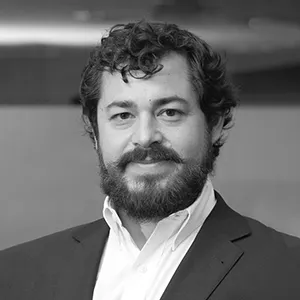
Graduated in Architecture from the Universidad Politécnica de Madrid and holds a PhD and a Master in Conservation and Restoration of Architectural Heritage from the same university, where he is an Associate Professor at the Department of Architectural Composition since 2019. He has been an Associate Professor at the Universidad Alfonso X el Sabio School of Architecture (Spain, from 2009 to 2019), a Visiting Scholar at the School of Architecture of the University of Notre Dame (Indiana, USA, 2016) and invited lecturer at many national and international universities, workshops and conferences. His professional practice has been focused on traditional architecture and building techniques and the restoration and study of diverse historic buildings and archaeological sites of multiple types and chronologies, mainly in Spain and Morocco. He is the Executive Director of the Richard H. Driehaus Initiatives in Spain and Portugal, including the Rafael Manzano Prize for New Traditional Architecture, the Richard H, Driehaus Architecture Competition, the Richard H. Driehaus Building Arts Awards, the Donald Gray Building Arts Grants and the National Directory of Traditional Building Masters (Hispania Nostra Award 2018, Europa Nostra Special Mention 2018), Member of the Board of Terrachidia NGO (INTBAU Excellence Award 2015), Vice Chair of INTBAU Spain and professor at the Centro de Investigación de Arquitectura Tradicional.
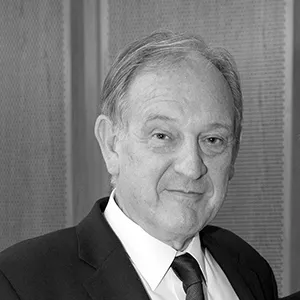
He holds a degree in Architecture from the School of Architecture at the University of Navarra. He has been Architect of the Historical Heritage Service of the General Directorate of Culture-Príncipe de Viana Institution of the Government of Navarra since 1986. He is a teacher at the School of Architecture of the University of Navarra and has been the Coordinator of the Specialization in Rehabilitation and Restoration of Architecture at the same institution since 2000. He is a member of the Academia del Partal and the Reial Acadèmia Catalana de Belles Arts de Sant Jordi. As an architect for the Príncipe de Viana Institution, he was awarded the National Prize for the Restoration and Preservation of Cultural Heritage in 1998 and has designed and overseen numerous conservation and restoration projects for various monuments in Navarra, including the medieval tower of the Señorío de Ayanz (1998-2000), which received the Silver Medal of the Spanish Association of Friends of Castles (2000); the Frente de Francia section of the Pamplona city walls (2000-2009), which was granted the European Union Prize for Cultural Heritage – Europa Nostra Award (2012) in the Conservation category; and the Royal Collegiate Church of Roncesvalles (1982-2012). He was awarded the Rafael Manzano Martos Prize in 2012.

An architect qualified at the Madrid Higher School of Architecture, with an MA in Heritage Restoration and Refurbishment from the Universities of Valladolid and Alcalá de Henares. He lectured at the Camilo José Cela University in Madrid in 2003-13 and has spoken at various conferences and workshops on heritage and restoration at several universities in Spain and abroad. In 1998 he founded his practice, Lavila Arquitectos, devoted to the restoration of monumental and historic ensembles, now with growing international activity. Among other distinctions, he has received the 2017 Europa Nostra Award for the restoration of six churches in Lorca damaged by the earthquake of May 2011, the Madrid Region Culture Prize, and the 2018 Rafael Manzano Prize for Traditional New Architecture.
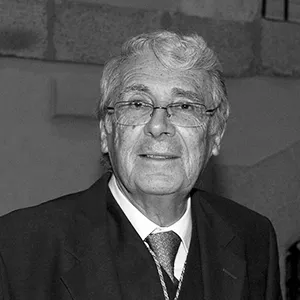
He holds a degree in Architecture and a PhD from the Polytechnic University of Madrid. He has restored numerous monuments in Spain and has designed new buildings both in Spain and abroad. He has been Professor at the School of Architecture of the University of Seville since 1966, where he was also Dean from 1974 to 1978. He has also lectured at many national and international universities. Among his multiple works, he was headed to the preservation of the Reales Alcázares of Seville from 1970 to 1991, chaired the works commission of the Real Patronato of the Alhambra and the Generalife from 1971 to 1981 (Shiller Prize for Restoration of Monuments in 1980), and headed up the preservation of the ancient Caliphal city of Medina Azahara from 1975 to 1985. He has published diverse texts on Medieval and Islamic architecture. He is a member of many national and international institutions, such as Real Academia de Bellas Artes de San Fernando; the Royal Academies of History and Fine Arts of Granada, Córdoba, Cádiz, Málaga, Écija, Toledo and La Coruña; and the Real Academia Sevillana de Buenas Letras. He has been awarded the Medal of Fine Arts, the Richard H. Driehaus Prize in 2010, and is also a Commander with Plaque of the Civil Order of Alfonso X the Wise.
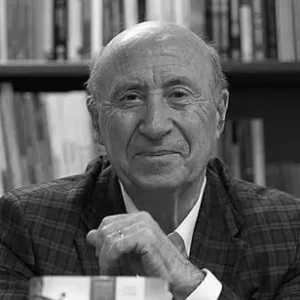
He is an architect from the Universidad Politécnica de Madrid. He has carried out numerous rehabilitation and new-build projects, including residential works and buildings for social and cultural use, with special emphasis on the restoration and rehabilitation of monuments and their surrounding contexts. Notable projects include the Monastery of Santa María la Real de Aguilar de Campoo, Palencia (Europa Nostra Awards in 1988 and 2013), the Monastery of San Benito in Valladolid, the El Capricho Park in Madrid (Europa Nostra Award in 2002), and the Teatro Principal in Burgos. He has played a key role in the promotion and dissemination of cultural heritage, particularly in relation to traditional building crafts. In 1985, he promoted and founded the Workshop-Schools Programme, dedicated to the training and employment of young people in heritage recovery. He is the founder and president of the Santa María la Real Foundation and has been, and continues to be, a member and patron of numerous cultural institutions. He is the director of the Great Encyclopedia of Romanesque Art in the Iberian Peninsula and directed and presented the television series Las Claves del Románico en la Península Ibérica and La Luz y el Misterio de las Catedrales. In addition to the awards already mentioned, Peridis has received the World Heritage Cities Award, the Silver Medal for Tourism Merit, the Gold Medal for the Fine Arts, and the Gold Medal for Merit in Work.
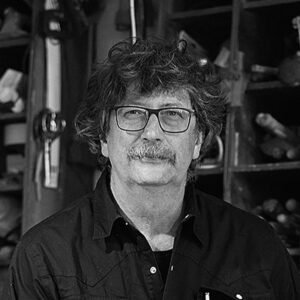
A master stuccoist and painter with wide experience in interior and exterior work on heritage and vernacular buildings. He learned the craft through family tradition and further training in ceramics and colorimetry at Institutos Superiores de Oficios in Spain, Belgium, and France. He works with traditional techniques using artisan-produced materials, and he researches, documents, and disseminates these procedures. He has delivered lectures and practical workshops at numerous Spanish and international universities, the Painters’ Guild of Madrid, the Federación Nacional de Empresarios Pintores (A.N.S.P.I.), the Museo de la Cal de Morón, and the Fundación Laboral de la Construcción. He serves as advisor and contributor at the Instituto Nacional de Cualificaciones and is co-author of the book Artes de los yesos. In 2019, he received the Richard H. Driehaus Building Arts Award and was selected as a master instructor for the Donald Gray Training Grant.
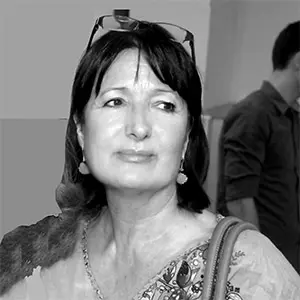
She is an ethnologist at the Intangible Cultural Heritage Unit of the Instituto del Patrimonio Cultural de España of the Ministry of Education, Culture and Sport. She coordinates both the National Plan for the Safeguarding of Spanish Intangible Cultural Heritage and the National Plan for Traditional Architecture. She recently curated the photographic exhibition Inmaterial: Patrimonio y Memoria Colectiva, which continues to tour various cultural institutions throughout Spain. She has received several awards for her research on intangible heritage, including the Matías Ramón Martínez Prize awarded by the Assembly of Extremadura through the Council of Cultural Anthropology, Folklore and Ethnographic Heritage, the Juan de Goyeneche Prize from the Assembly of Madrid, and the National Research Prize Marqués de Lozoya in Arts and Popular Traditions. She has published around ten books and nearly one hundred articles on topics related to Intangible Cultural Heritage. She teaches Master’s-level courses on Intangible Cultural Heritage at several Spanish universities and has directed approximately twenty specialised courses on related subjects. She serves as the Spanish representative for Intangible Cultural Heritage within the JPI–Cultural Heritage programme of the Council of Europe.
The Building Arts Awards are convened annually by the Traditional Building Cultures Foundation, with the support of the Spanish Ministry of Culture and the collaboration of INTBAU Spain and the Spanish Council of Architects’ Associations.


The Ministry of Culture and Sport, through its Directorate General for Cultural Heritage and Fine Arts, manages the measures that must be adopted for the protection and defence of historical heritage; oversees the competences attributed to the State in matters of intangible cultural heritage; coordinates the identification, documentation, support and safeguarding of traditional arts and crafts; and prepares and implements plans for the conservation and restoration of immovable heritage assets, as well as cooperation with other public administrations and public or private entities for the development and monitoring of these plans.

INTBAU Spain develops its initiatives to promote traditional building, architecture and urbanism and serves as a platform for collaboration and exchange of information, contributing to the promotion of other related initiatives organized by its members and other institutions linked to the network itself.

The Spanish Council of Architects’ Associations (CSCAE) is the body that brings together all regional Architects’ Associations to pursue common general interests. It also serves as the representative body for these associations and the architecture profession before public and private institutions, as well as international organizations.