Cantería Jaurrieta

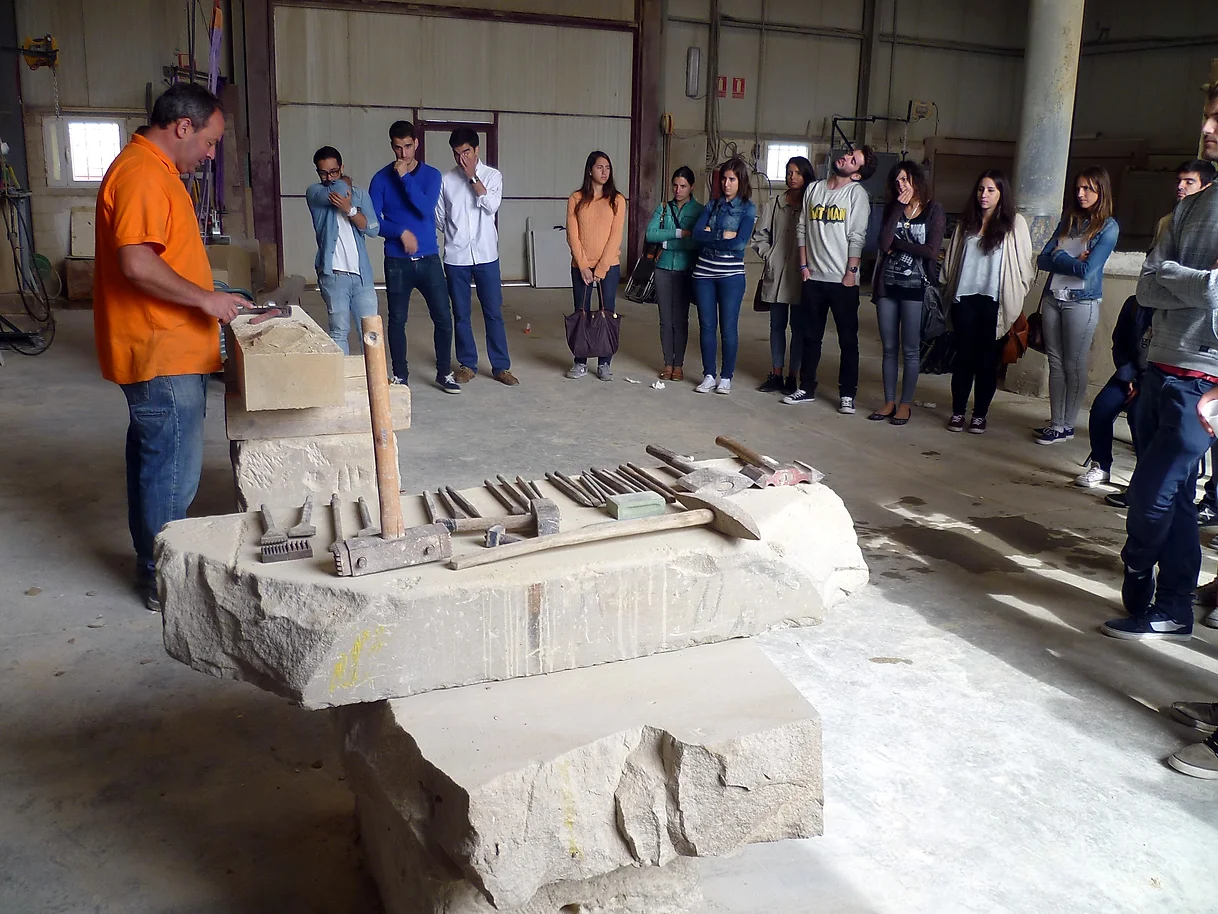
Cantería Jaurrieta is a small family-run company from Navarre based in Olite. Valeriano Jaurrieta began his training in stonework in 1987 in Tafalla and soon started working at the Workshop of the Government of Navarre in Olite, where he remained until 2001, when he founded Cantería Jaurrieta together with his wife, Agustina Rodríguez.

Although they also work on new construction, their main activity has been stone masonry for restoration projects. Their work therefore usually begins with visiting the building to be restored in order to take templates and measurements of the pieces to be carved in the workshop. In their practice they combine traditional tools with contemporary machinery. This approach allows them to reduce costs without compromising the desired quality, using machines only to relieve the most physically demanding tasks, such as cutting and rough dressing the stone, while carrying out by hand all those operations in which the craftsman’s sensitivity and creativity make a decisive difference to the final result. Mastery of geometry is essential throughout the entire process, as it is the only means of transferring the intended forms into stone.

Thanks to their mastery of stone carving, the Government of Navarre has been able in recent decades to undertake the restoration of stone structures not only in some of Olite’s most important monuments, such as its Castle and the church of San Pedro, but also in many other monumental complexes across Navarre, including Ujué, Sangüesa, Artajona, Roncesvalles, and Pamplona Cathedral itself. Gargoyles, tracery, and pinnacles from numerous medieval monuments have been given new life in this workshop, whose continuity is essential to the preservation of this rich heritage.

Carpintería Los Tres Juanes

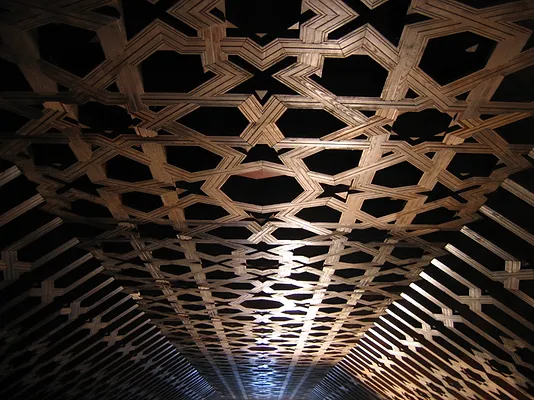
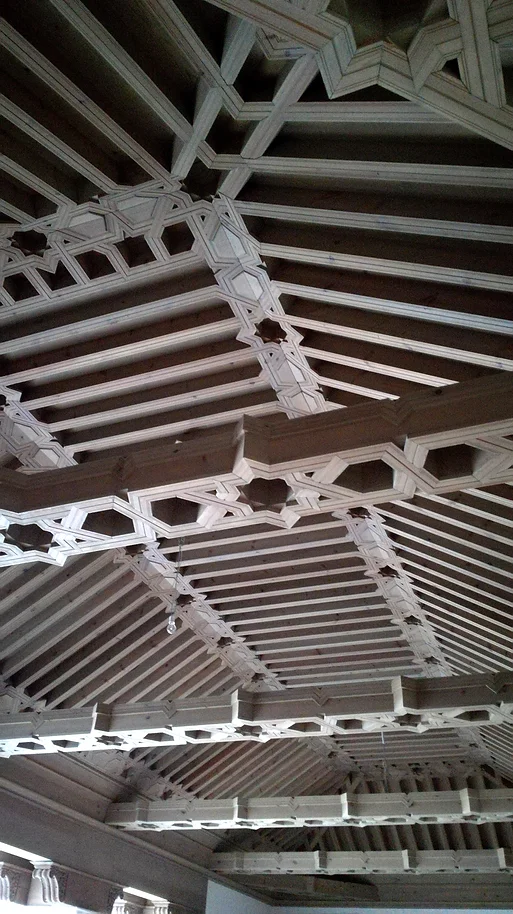
Los Tres Juanes is a business specialized in the Spanish tradition of structural carpentry: roof wooden structures and alfarjes, structural or of a decorative nature, with whichever design ”laced” carving or muqarnas. The business was created over 20 years ago by the association of former students of an ”Escuela-Taller” in Atarfe with their carpentry master, a carpenter from the neighbourhood of Albaicin in Grenada with great knowledge of structural carpentry. The business is created by three associates: Fernando Alanis Moreno, Juan de Dios García Garcia and Luciano ¡ Ramírez Ruiz, who have broadened their team of professionals within the field gradually.

From their workshop in Atarfe in the so-called “Vega de Granada”, they have worked on many restoration projects of historic structures, some of which together with leading architects such as Enrique Nuere Matauco or Rafael Manzano Martos. They have participated in the restoration works of important Spanish monuments such as the Buenavista Palace and the Villalon Palace, today the Picasso Museum and the Thyssen Museum in Malaga, the San Pelayo Monastery in Cevico Navero, the Church of Santa Maria de los Reales Alcazares in Ubeda, the Condestable Palace in Pamplona or the Joaquin Peinado Museum in Ronda. They have also developed works for projects which require this attractive genre of carpentry in other countries such as the United States, Algeria or Bahrain.

They possess the latest technology in terms of machinery which enables them to precisely control each one of the pieces and their many joints, just as how the current standards of construction demand. Despite this, throughout the process it is completely necessary to have both the traditional tools and the highly qualified team of professionals who are able to adjust, assemble and place on-site this type of structures.

Fátima Quesada

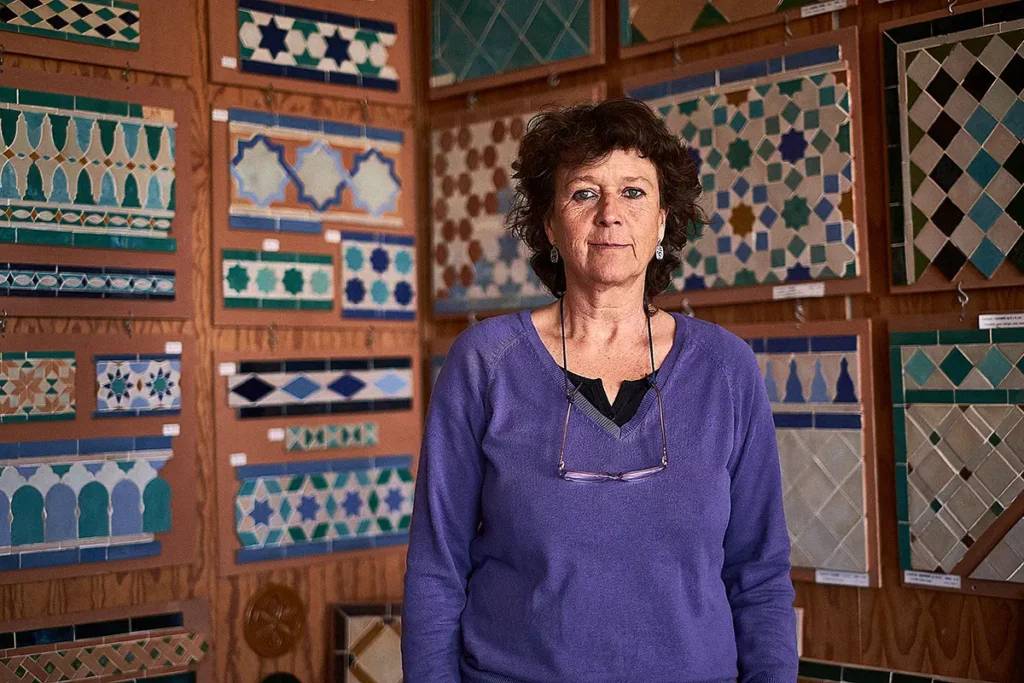
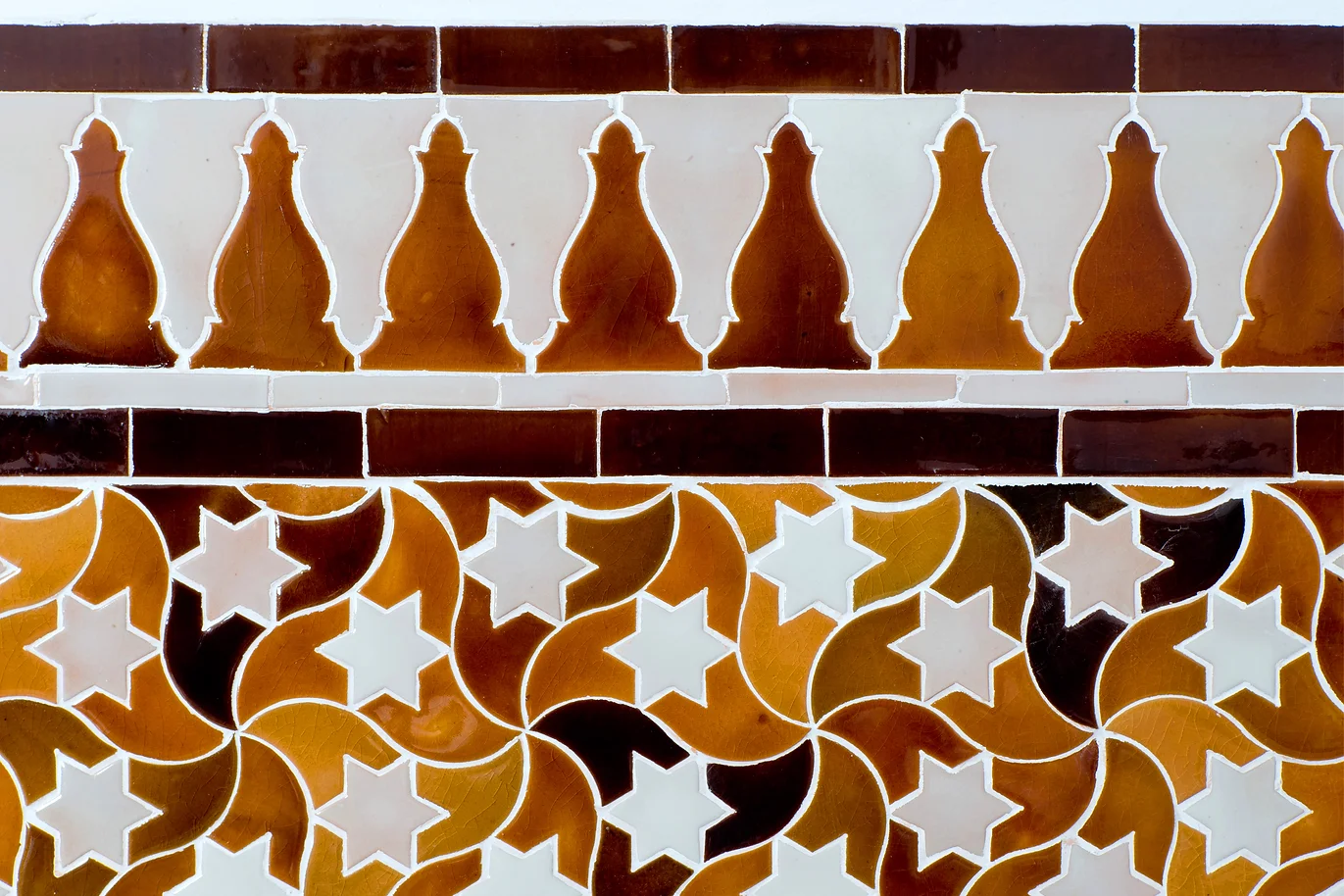
Fátima Quesada de la Cuesta, since the very beginning of her apprenticeship within the profession, dazzled by the richness in colour and composition of the Nasrid tiling, put the focus of her research on retrieving the forgotten techniques which made it possible: the geometric patterns, the textures, the natural pigments, the chemistry linked to metal oxides and silicates… Thanks to this hard work, and after having attended the “Escuela Taller“ created by Donald Gray in Lebrija – where she became part of the teaching staff-, she started her own small workshop in Pitres (La Taha), right on the hills of “La Alpujarra” in Granada giving it the name of “Alizares”.

Once these techniques had been revitalized and updated, she started to develop mosaics made out of tiles which were unique in the entire world. The projects are always designed specifically for each surface, taking into account not only its dimensions, but the colour and lighting of each space. It’s a sort of closed composition, with a defined perimeter, something similar to what happens when you have a tapestry or a carpet.

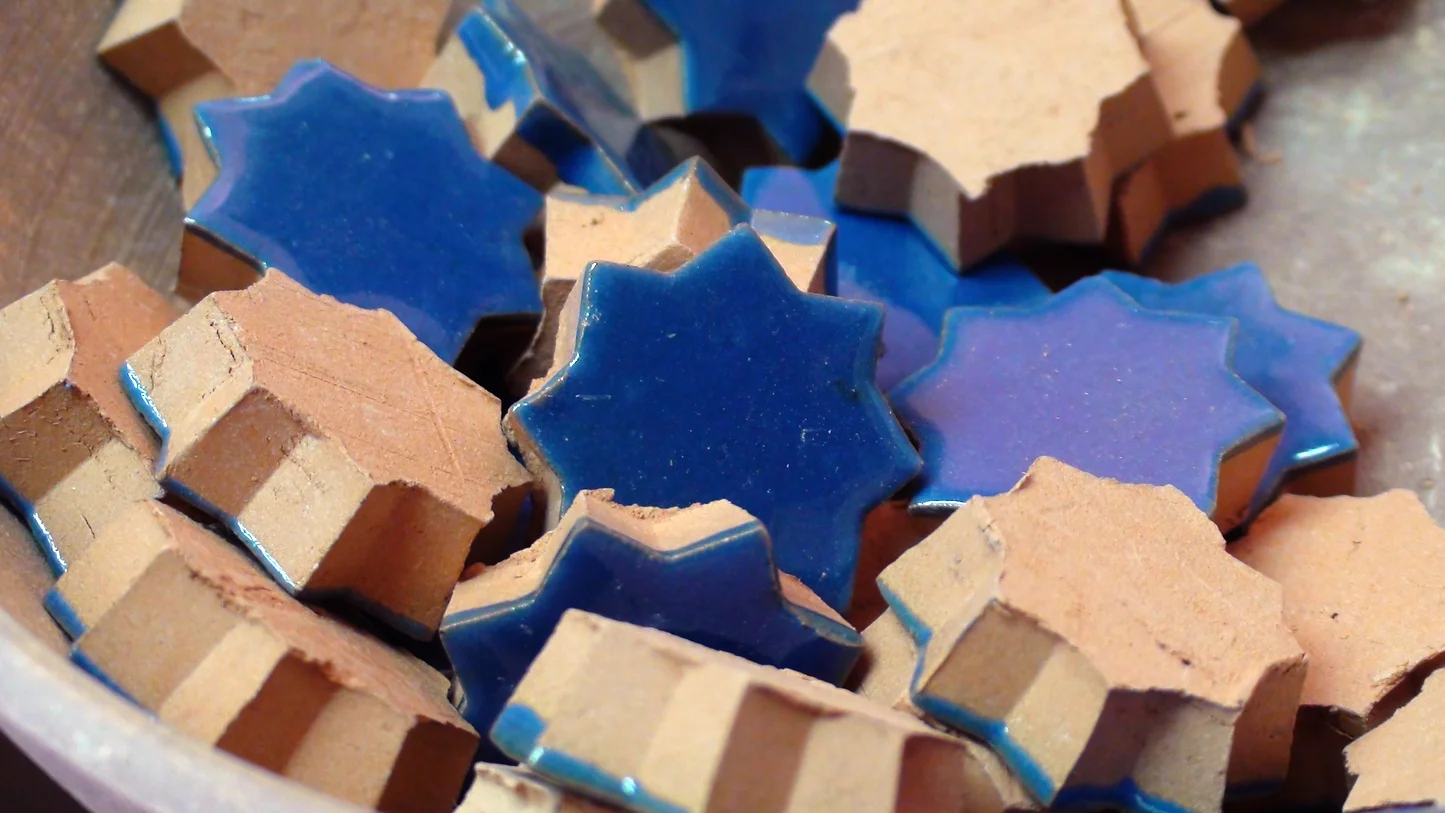
The process of the actual production starts therefore with the development of a general design. Without leaving aside the textures and chromaticism of this tradition, Fatima works on the necessary pieces to develop the composition she is searching for introducing many updates which enable a rigorous control of the quality of the final outcome. Each element is cut before the firing of the ceramic, using a series of stencils she herself has created for that purpose. The edges are always bevel cut, just as it was done traditionally with this sort of tiling in Granada. This way, the joints between the tiles are considerably smaller on their visible side, being reduced to the bare minimum, whilst on the interior side, there is enough space to enable the mortar to penetrate well enough between the pieces. The mosaic made of tiles becomes one only large mass with its supporting element, this way avoiding future chippings.

Enric Pla Montferrer

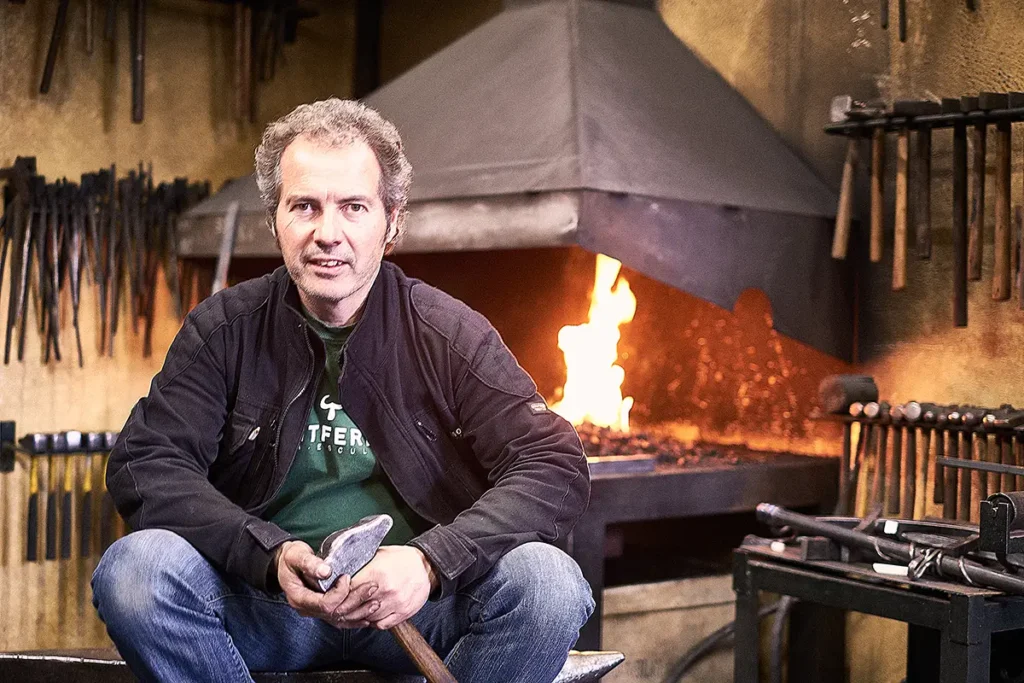
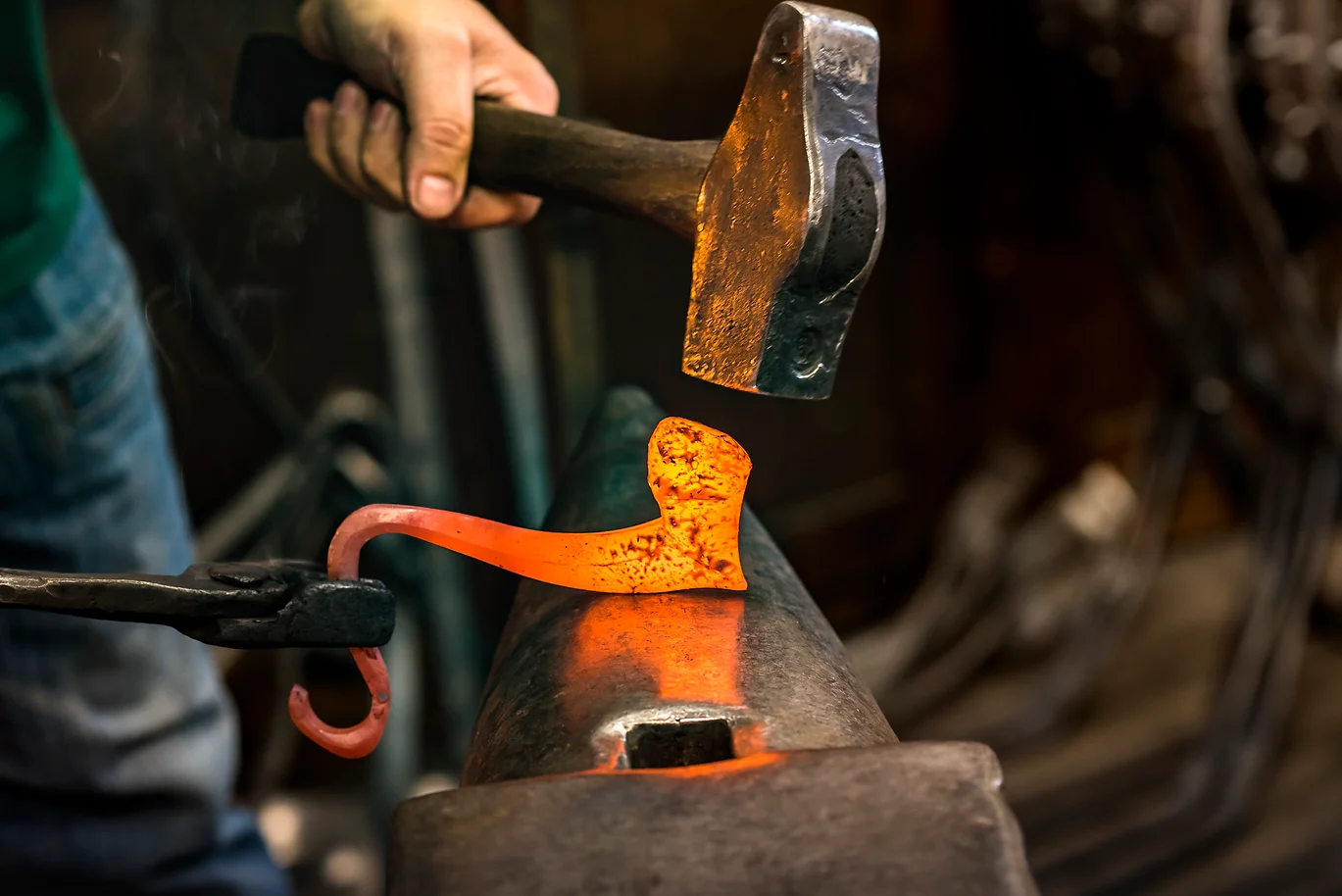
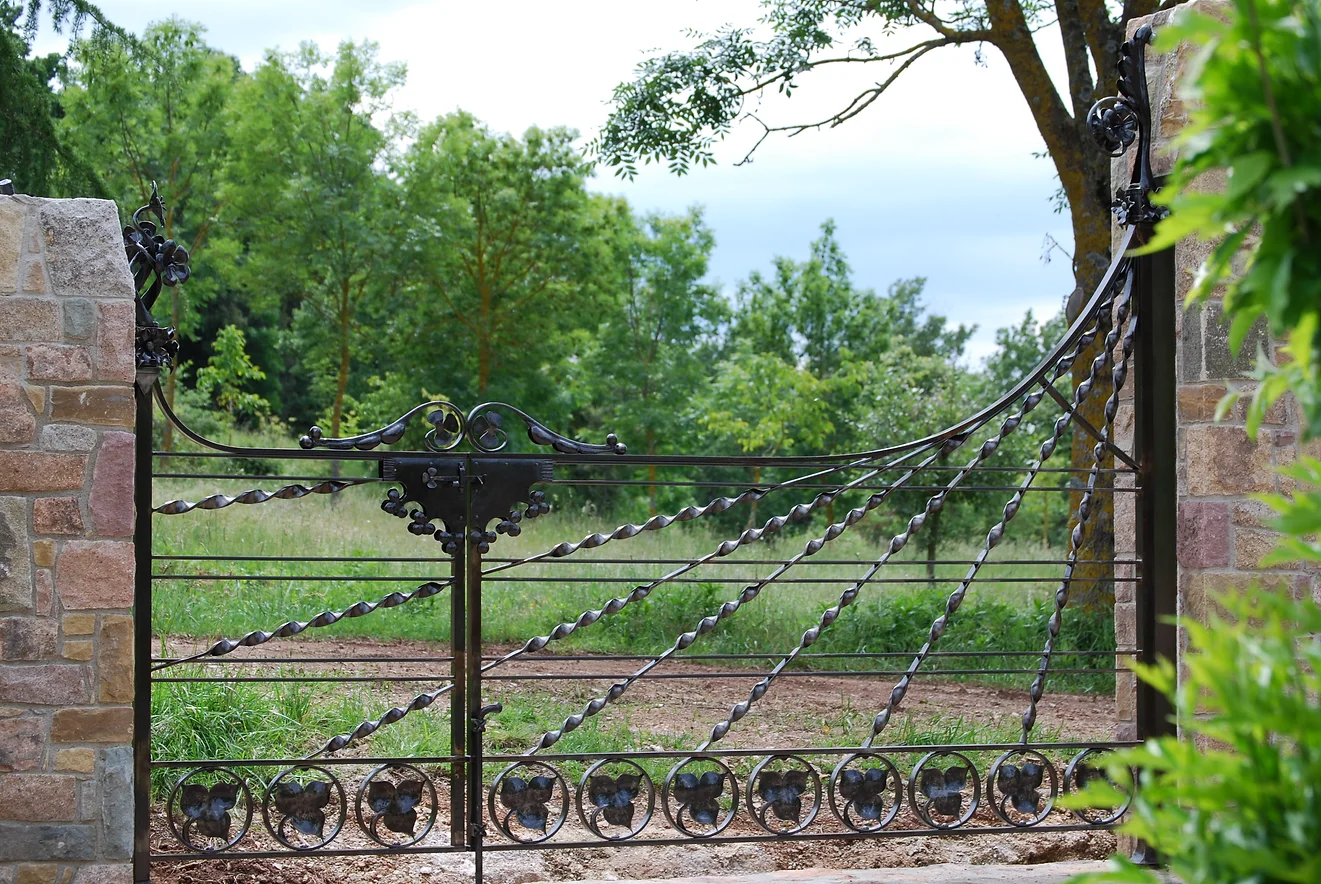
Enric Plá Montferrer is one of the experts to look up to in the field of ironwork at an international level. He discovered the craft at the Escola d’Art de Vic, with masters such as Miquel Amblas, and then continued his apprenticeship with the sculptor Josep Plandiura. Thirty years after that beginning, from his workshop in Alpens, a small town in the Catalonian Pre-Pyrenees which belongs to the province of Barcelona, he shapes iron to obtain from it almost any shape one could dream of.

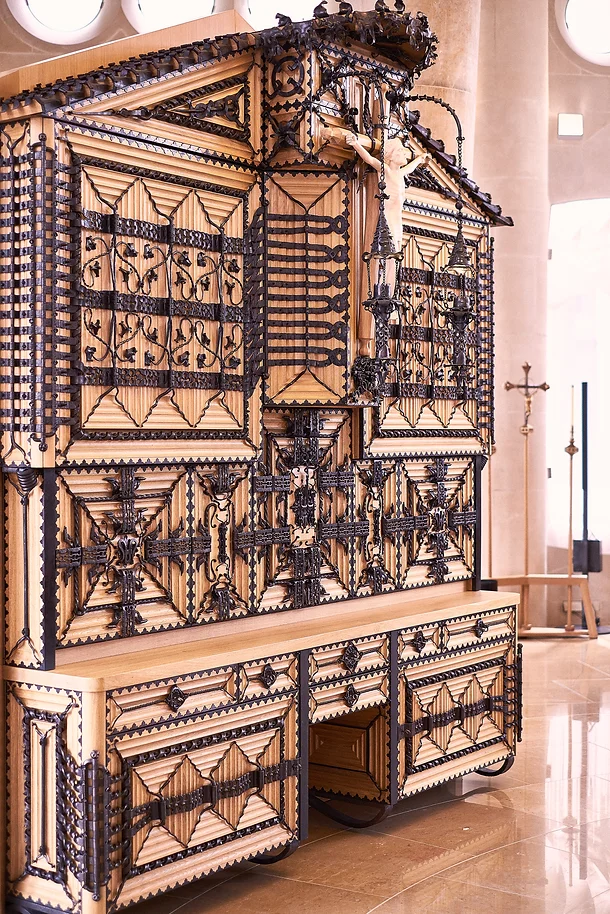
It is for that reason why he has standed out for his delicate ironworks for some of the most emblematic buildings of the “Catalonian modernism”, thanks to which, today, he is the coordinator of all the ironwork projects that are being developed in the Temple of the Sagrada Familia, where he started working in 2012: benches, railings, staircases, etc. This task has turned him, probably, into the most knowledgeable person in terms of the ironworks designed by Gaudi, having restored works as relevant as his Cabinet for the Sacristy of the Sagrada Familia.

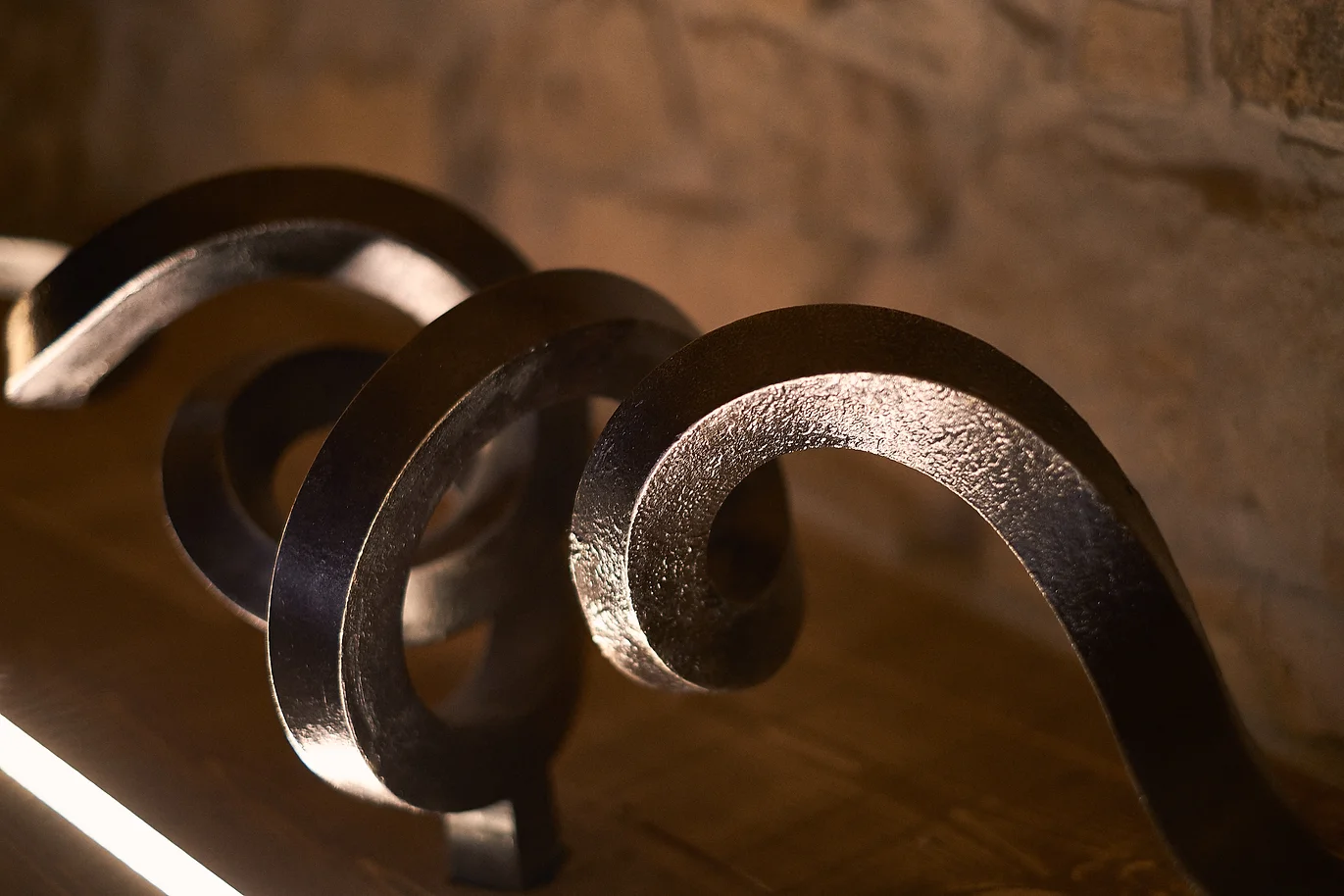
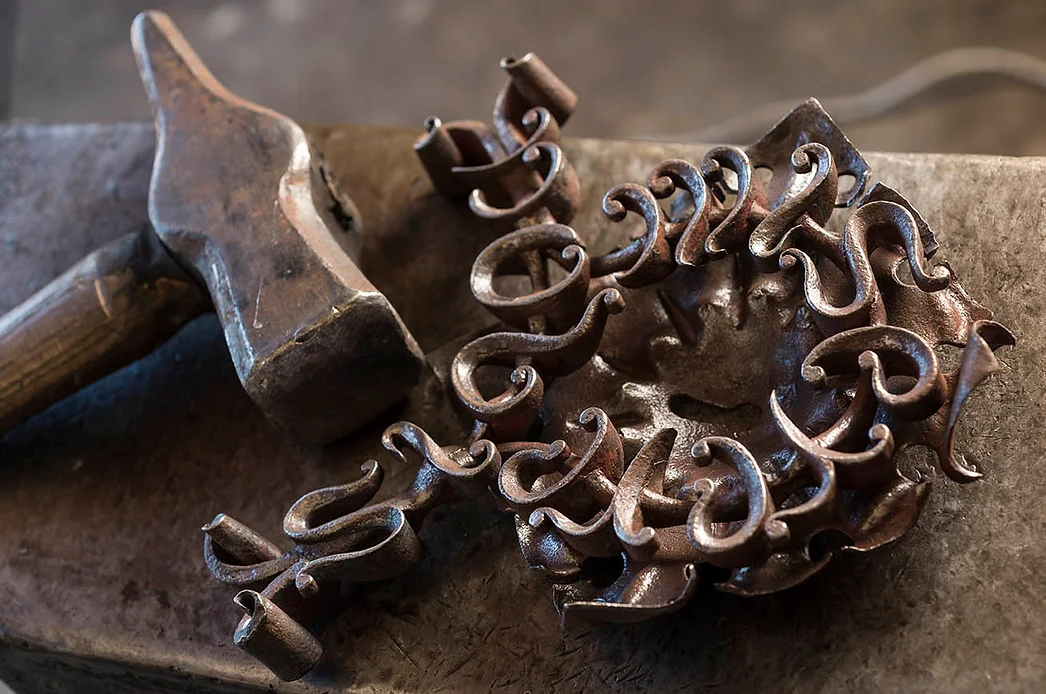
Thanks to his mastery of “modernist” ironworks, he has gone from restoring them to creating new designs based on them. Ironwork is still basically the way it has always been, heating up the metal in the forge and hitting it to shape it on the anvil, almost lacking in machinery to aid the forger in his work, since it could make it lose its quality. Thus, the shapes and techniques of his new creations share the same spirit of those by the blacksmiths from the late XIX century and the beginning of the XX century had.

Since 2001 he is also one of the advocates for the International Encounter of Blacksmiths of Alpens, the most important encounter throughout the country, where blacksmiths from all the world gather together.

Publication

It was published on the occasion of the Awards Ceremony of the Richard H. Driehaus Architecture Competition and the Richard H. Driehaus Arts of Construction Awards 2018, as well as the inauguration of the exhibition New Traditional Architecture: MMXVIII, which presented the works of the award recipients from both initiatives and was on display from 14 June to 26 July 2018 at the Arquería de los Nuevos Ministerios in Madrid.

This publication gathers the results of the Richard H. Driehaus Architecture Competition and the Richard H. Driehaus Building Awards 2018. Both were organized by INTBAU (International Network for Traditional Building, Architecture and Urbanism), with the collaboration of the Department of Building and Architecture of the Ministry of Public Works and Infrastructure, the Department of Beaux Arts and Cultural Heritage of the Ministry of Culture and Sports, the Rafael Manzano Prize of New Traditional Architecture and the Council of Architecture Institutes of Spain.

Awards Ceremony

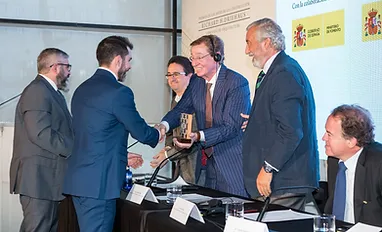
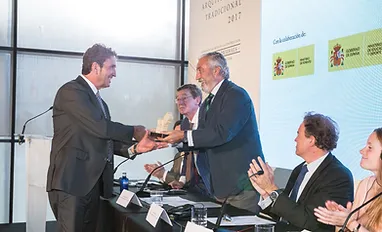
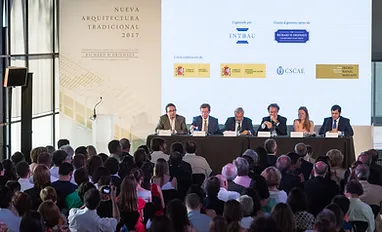
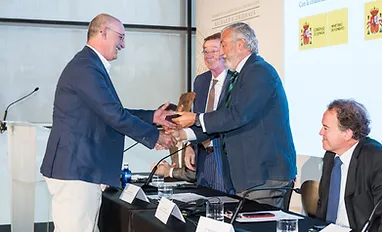
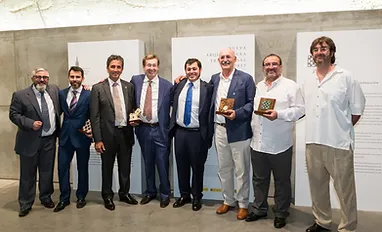
On Wednesday, 13 June, the Richard H. Driehaus Building Arts Awards ceremony took place at the Arquería de Nuevos Ministerios.

The ceremony was presided over by Mr. Julio Gómez-Pomar, Secretary of State for Infrastructure, Transport and Housing; Mr. Luis Lafuente, Director General of Fine Arts and Cultural Heritage; Mr. Richard H. Driehaus; Ms. Harriet Wennberg, Director of INTBAU; Mr. Alfonso Samaniego, Vice-President of the Spanish Council of Architects’ Associations; and Mr. Alejandro García Hermida, Coordinator and Chairman of the Jury for both initiatives.
Exhibition New Traditional Architecture 2018

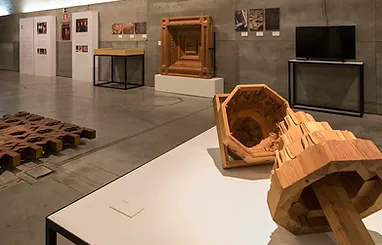
From 14 June to 23 July 2018, the exhibition New Traditional Architecture 2018 was open to the public at the Arquería de los Nuevos Ministerios, showcasing the works of the award recipients.

Secret Link